‘Que tal?’
That’s how my Spanish tutor has started our Spanish lessons twice a week, every week, for the past 4 weeks. My lessons are in the evening, after work, so I’d usually answer with a mixture of ‘estoy bien’ and ‘pero…estoy cansado’.
For the uninitiated, that’s ’how are you?’ Followed by a quick ‘I am good, but…I am tired.’
Par for the course for a tired teacher.
Yet, each week, I noticed that, sure enough, my Spanish was improving. I’d add a little more detail about my day or maybe start the conversation – and she’d tell me about her day, too.
The best part? I could understand her. Maybe not all of it; maybe it would take a second to mentally translate as much as I could, but I knew, more-or-less, what she was saying. In four weeks of language-learning, I’d come on leaps and bounds, but what had changed? What had pushed me to upgrade from independent apps to 1-2-1 tutoring?
Well, a couple of months ago, during another well-earned half-term, I ventured off to Florence. Equipped only with my shiny new Samsung Galaxy S25 Ultra, I toured the city using an AI-made itinerary, inspired by my adventures in Assassin’s Creed II over 15 years ago. Click here if you want to read about how that went, and whether AI can replace a tour guide (spoilers: kinda, but not really).
The person I’d gone with had done a year of Italian at University, and had over 15 years of experience of speaking Spanish to actual Spaniards, so her language proficiency was pretty great. As a result, she was left in charge of conversing with the locals; her accent was so convincing that the locals started to ask which part of Italy she’d travelled from.
Meanwhile, there I was: I’d earned a 1600-day streak on Duolingo and had tried using its competitor, FluenDay, and a Netflix-like subscription called Lingopie. All three of these modes have done wonders for my comprehension, and I’m still using Super Duolingo to this day (yes, I still think it’s worth it in 2025). I can happily waltz about a supermercado en España, identify all of the food I need, work out which Orange Juice cartons contain pulp, and walk home happy.
But the minute you put me in the same cramped cab as a local, I freeze. Try as I might, my lips seize up; I’m stumped.
Dios mio.
Imagine my frustration at feeling like dead weight when trying to engage locals on our Italian trip. All of these self-paced language-learning apps have been terrific for keeping my comprehension practice in good form, but they’ve not necessarily helped me to sustain a real conversation beyond the necessities, despite a couple of past bright spots.
Yet, for the past month, that’s exactly what I’ve been doing. Here’s my review of Preply, a 1-2-1 online tutoring service for learning languages. As a teacher myself, I was really interested in seeing whether this would worthy of all of the positive praise it had been receiving online.
Scroll all the way to the end for my full review, but grab my 50% discount link as you go.

What is Preply? How does it work?
Preply (pronounced prep-lee) is predominantly a language-learning service that connects you with a tutor in your target language. Its aim is to get you better at speaking Spanish, or English, French, German, Italian, Polish and even Russian. In fact, there are many, many other languages on offer, as well as non-language-themed skills, such as coding, copywriting, and even one tutor who offers lessons on how to improve your skills in the video game Dota 2. I’ll be focusing on its language-learning features, which I feel are its key focus areas.
Preply is still a relatively new company, having begun life as a startup in 2012 and then quickly branching out to the UK and New York after setting up shop in Barcelona in 2019.
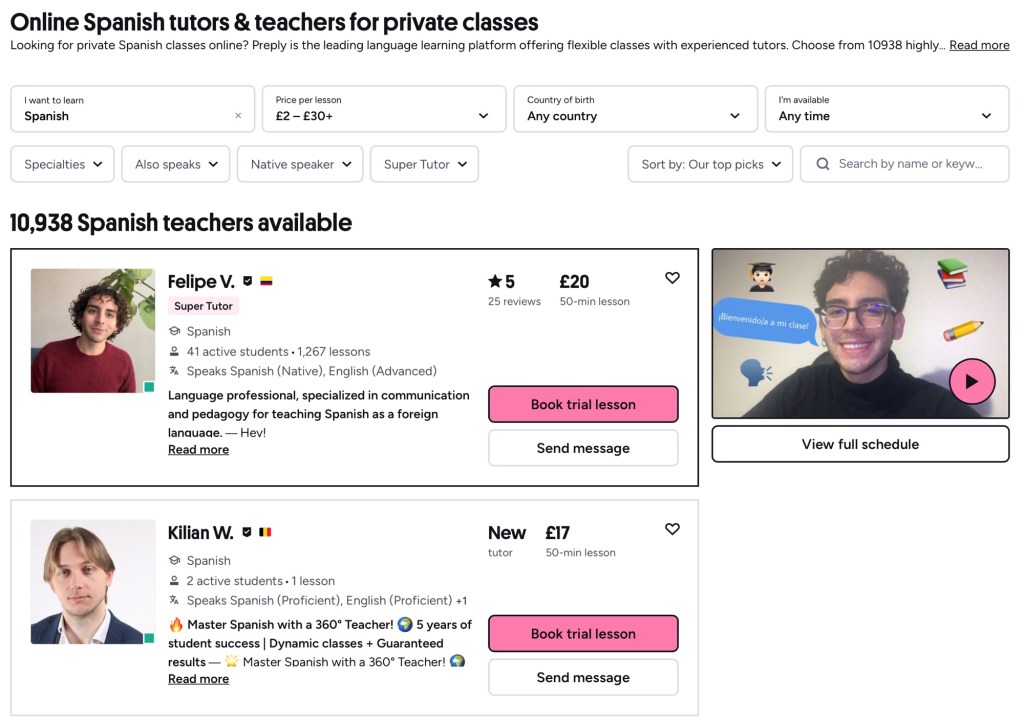
To get started on Preply, you’ll need to match with an appropriate tutor, Preply offers a bunch of criteria which you can filter results through. This includes being able to sort by price, popularity, number of reviews, whether they know multiple languages or only their native one, and specialities – like for tutors who offer services for beginners, conversational tutoring, or language learning for kids.
I think this system is great. With any private tutoring, you could end up spending a lot of money, so it’s essential that you get a very clear idea of who, exactly, will be offering you a curriculum.
Once you’ve applied your filters, get to work: there are thousands of tutors to choose from and, if you don’t pick one, you could be searching all day. When I selected my tutor, I had a really clear idea of the type of person I wanted to make my experience as positive as possible. I wanted someone who was proficient in various languages, gave an insight into what their classes offered, a video introduction to give me a sense of who they are, and their popularity – so I could work out whether they’d be able to accommodate for the specific time slots I wanted. As a teacher, I also thought that it was really important to choose a tutor who had some kind of a background in teaching. Otherwise, I think that I’d just end up getting frustrated if our styles didn’t match.
Luckily, Preply accommodates for all of these features. It also clearly indicates the price that they charge per lesson, so I’d know exactly how much I’d be spending. This is essential, since you’ll need to keep a budget in mind that you’re unprepared to waiver from.
That all leads to my Spanish tutor of choice: Silvia. She described herself as an experienced, native Spanish teacher, having earned Preply’s ‘Super Tutor’ badge. You can get that after maintaining a 100% attendance rate, teaching a number of lessons, offering prompt message responses and having high ratings, among other criteria. As well as Spanish, she was experienced in teaching Italian, German and English. She’d also listed her education, work experience, and qualification certificates. Most importantly, though, she claimed to tailor her lessons to students of different levels and ages, according to their needs and objectives.
That part really stood out. When you learn the craft of teaching, you’re told how important it is to differentiate your pedagogy so that all learners’ specific needs can be met, so knowing that my incumbent tutor knew that too filled me with hope. Before our first lesson, I was asked to complete a short placement test that included written and spoken answers for Silvia to review and use to plan our first lesson. The test was great because it also stamped a score on my language abilities: A2.1, pre-intermediate, which is right about where I thought I’d be. For context, the highest level is C2, which indicates fluency.
I did wonder, though, whether all of this preparation would be worth it. What’s it like to learn Spanish online?
Preply’s language-learning experience
In short: I love it.
Here’s what it’s like to learn with your Preply tutor.
Your first lesson is likely to look very similar to mine. It’ll be a trial lesson, meaning that you won’t be charged if you don’t like it. Sadly that means that the tutor won’t get paid for your first lesson, but more on that later. It’s important that things go well between you and your tutor, since a good working relationship means that you’ll be more likely to come back every lesson and stick to the learning process. If you bounce between several tutors simply because they’re marketed as ‘free’, you’re not going to get anywhere.
Silvia began our trial lesson by introducing herself and asking some ‘getting to know you’ questions – in Spanish, of course, which meant speaking in my target language from the get-go. I felt a little nervous to begin with. Long before training to teach, I’d actually signed up to tutor History on another platform, but stage fright had got the better of me, and I’d never gone through with it. Therefore this whole thing was totally new to me – especially being the student, rather than the teacher.
I think that Silvia could probably detect my apprehension from a mile off, but she remained calm and supportive throughout. Once we’d exchanged pleasantries, she swapped into English seamlessly and explained the structure of her lessons, and enquired into what my individual goals were.
As someone who’s been trying to speak Spanish for years, my goal was pretty simple: I wanted to practice speaking to a native. My main issue is that I can just about understand what’s being said in most contexts, but then I need to translate that in my head, before working out what I want to say in English, and trying to translate it into Spanish.
She said she understood and would tailor her lessons to fit my needs. My nerves eased and, almost immediately, I felt much better about speaking Spanish.
What is each lesson like?
As the weeks progressed, Silvia mixed up her teaching strategies. I wondered, going in, whether I’d experience the same kind of format that my students encounter. In my day job, we begin each lesson with a review of prior learning, to commit what students know to their long-term memory. I’ll then hook students in so their interest is piqued, introduce the learning objectives, and explain and model the task.
Then, students have independent practice time, before I check their knowledge and rinse and repeat.
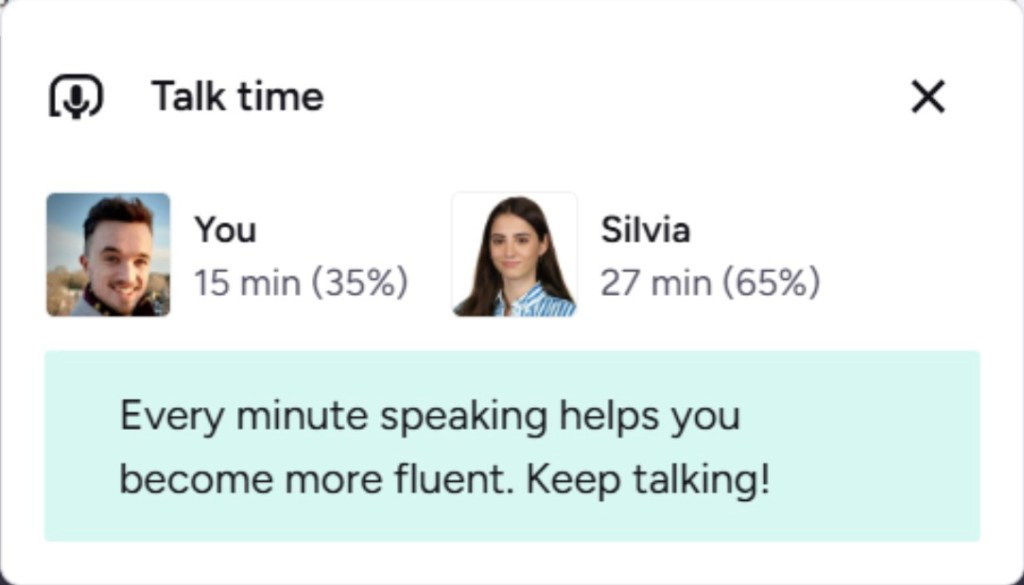
Silvia, meanwhile, began our lessons with a quick catchup in Spanish, before introducing the lesson content and our focus. She dual-explains everything – in Spanish, first, and then in English, to over-expose me to my target language, but also to check that I know what’s going on, which I really appreciate. She’d then check what I’d learned in the previous lesson to see if I still remembered it.
We’d then move onto the lesson’s main focus. One of my more memorable experiences involved discerning masculine and feminine words. Going in, I had been pretty confident; masculine words end in ‘o’ and use the article ‘el’, like ‘el pero’ (the dog), while feminine words end in ‘a’ and use the article ‘la’, like ‘la casa’ (the house). Little did I know that there are countless words that break those rules. We worked through some examples in an online textbook that Silvia shared with me. I’d been concerned that this would be an extra thing to spend money on, so imagine my relief when she revealed a free PDF shared via Google Drive.
Later on, I watched a video clip of a woman filming her friends and family, asking for their names and occupations. Silvia asked whether I’d found the video ‘fácil’ or ‘difícil’, meaning ‘easy or difficult?’ I’d nodded that it was pretty easy, only to crumble under her comprehension questions – they were so tough! This was such a great moment to reflect on my own teaching as to how students must feel in my classroom when they don’t know the answers. However, Silvia scaffolded her questions to help me to recall information about what I had just seen, which is the sign of a fantastic teacher. Each of her lessons also incorporate a whiteboard that we can draw on, which has worked wonders for aiding my understanding of spelling trickier words.
The part of her teaching that I was most impressed by, though, was being able to adjust her lessons on the fly. When we were catching up, she explained that she’d planned to focus on refining masculine and feminine words, but because I’d struggled to discern between when to use ‘estar’ or ‘ser’ (both meaning ‘to be’ in different contexts), we’d focus on that instead. Silvia immediately shifted gears and taught me some very useful acronyms that helped firmly cement these ideas in my brain.
In a classroom, responding to your students and adapting your teaching is utterly crucial – and this was something that she’d mentioned being able to do in her biography, so I was pleased to see it happen in real time.



If you’d like to be taught by Silvia, you can find her page by following this link. Just make sure that you grab my 50% discount link before you do.
Flexibility and interleaving strategies
How long are lessons on Preply?
Preply is really flexible because it gives you the freedom to decide how often you’d like to learn. I went for two 50-minute lessons a week, though you could double-up to 100 minutes, stick to one lesson a week, or take part in learning every day if you’re really committed. When deciding on a schedule that works, you’ll be asked to subscribe to a tutor, converting your money into lesson credits. In some ways, I love this: committing to a schedule means that I’m much less likely to flake on my appointments.
Equally, because my money has been converted into lesson tokens, I don’t need to think of them as having any monetary value, leaving me free to focus on the learning experience. It’s kind of like how the parents of my students essentially fund my salary through their taxes, but nobody ever has this impression when they’re being taught (or doing the teaching).
Also, when I needed to reschedule a lesson after finding out about a work meeting which was going to overrun the next day, this was very easy to do – as long as I gave 12 hours of notice, which I think is pretty reasonable.
With that being said, this must all be Preply’s strategy to keep their users hooked, so that you don’t think about the cash that’s being spent until it leaves your bank account every month. If this doesn’t bother you, then you should continue to use the service for as long as it works for your learning needs.
Homework (as an adult?)
As a teacher, I know very well the advantages of giving out homework. It’s not just a chore; homework really does cement prior learning and reduce the impact of the forgetting curve. This curve shows that as time goes on, without regular retrieval practice, we’re unlikely to fix ideas and concepts into our long-term memories.
So I wasn’t really surprised when I saw that this was an option on offer through Preply. Your tutor can choose to set you homework that go over or provide opportunities for flipped learning, where you do some initial reading or tasks and then recap them in class. I’ve not personally tried out this feature, as I decided to give Preply a go right as marking season hit in my day job, but it’s there as an option if you want to extend your learning offline.
In between lessons, you can also indicate the concepts that you’d like to follow in class, but I chose to leave these blank to give my tutor the flexibility to plan her lessons in a way that she saw fit.
Revision strategies
Right around this time last year, when one of my students asked for help with how to revise, I threw together a huge document, full of revision strategies. One of the more popular techniques is to create flash cards based on the key concepts that you’ve studied, adding the answer to one side and the question on the other, to question yourself when the teacher’s not available.
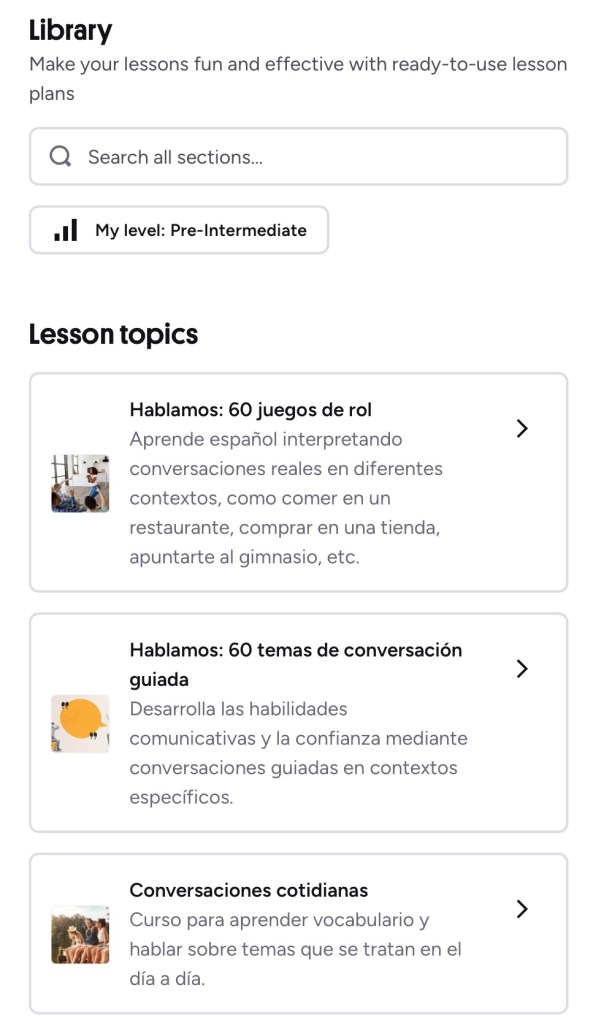
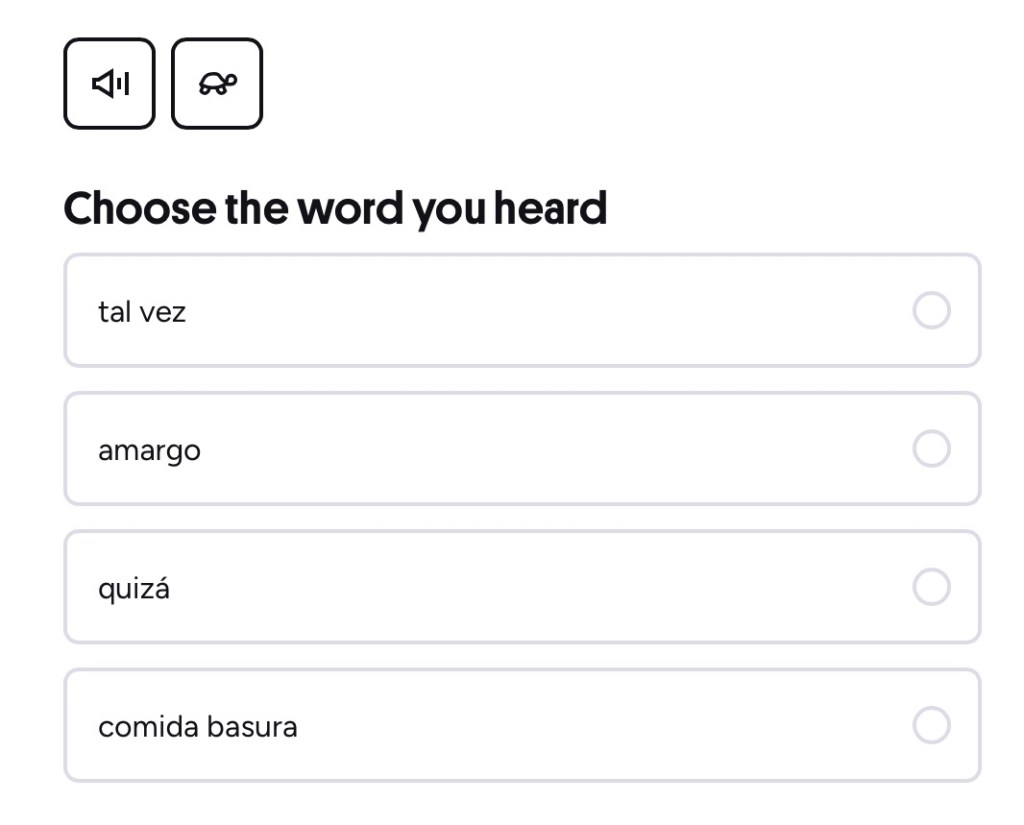
Preply allows you to do this with ease, automatically transferring the words or phrases that you’ve used in your lessons to a word bank. It will read it aloud, which is great for pronunciation practice. Equally, there are a whole host of self-paced lessons that you can do without the aid of a tutor, including gap fills and reading comprehension. It’s quite a comprehensive service.
One disadvantage of using Preply
From a tutor’s perspective, I do think that Preply probably markets itself more towards optimising their users’ experiences. While it’s great that we can get free trial lessons, the tutor won’t actually make any money from that initial lesson, with Preply taking a 100% commission if you decide to stick with them. Once you’ve chosen your tutor, commission goes down to a 33% cut, progressively decreasing to 18% after 400 hours of teaching. For context, in my full-time teaching job, I do 26 periods of 50 minute lessons a week, or 22 hours of standing in front of a class and teaching them content. If you did 22 hours of teaching a week via Preply, you’d be looking at around 18 weeks, or four-and-a-half months, of teaching until you’ve reached the coveted 18% rate.
Whether you’re okay with that as a tutor will depend on how much you value your time.
Parting thoughts: would I recommend Preply?
Yes, without a second thought.
From start to finish, everything was so smooth in getting me connected to a tutor who can meet my specific needs and work towards my goals. The additional services that it offers, like homework and independent practice, make the service feel complete.
While I can’t say that you experience will be identical to mine (it’s literally impossible to learn with every single tutor that the platform has to offer), I’m confident that you’ll be able to use its trial lessons to find the perfect match. I’ve not become fluent by any means, but speaking with Silvia twice a week has cemented some core concepts that I’d struggled with and increased my confidence tenfold. Maybe this year, I’ll try and lead the conversations with locals.
If you’d like to try Preply, check out my affiliate link, where you can get 50% off.

This was a paid post for Preply. Preply also granted me a budget of $300 to spend on private tutoring in exchange for an honest review. I would never recommend something that I don’t like or actively use, which means that you can always trust what you read at HardlyHamilton. Plus, to get the full 8 lessons across 4 weeks, I actually spent some of my own money, as I wanted the most true-to-life experience of a real student reviewing Preply.
If a reviewer uses their own money to finish their testing, you know that the service is probably pretty great.
For more information on how I work with brands, please click here. Or, if you’d like to work with me, check out the ‘contact me’ section and get in touch.
If you liked that, you’ll love…
- The Art of Saying No: How to Protect Your Teaching Capacity this Term without the Guilt
- Google Workspace for Education: The Complete Masterclass for Busy Teachers
- How ditching the Pomodoro Method saved my Sunday Planning as a Teacher
- How to Combat Screen Fatigue: A Teacher’s Review of Yellow-Tinted Overlays
- How to avoid Workslop: a Teacher’s Guide to Intentional AI
Check out my socials!
 Hardly Hamilton
Thank you so much for this thoughtful and generous review and thank you as well for the time you took to share your experience with Preply and for trusting me to accompany you on this journey!
I strongly believe that real progress happens when there’s a meaningful connection between student and teacher. It has been genuinely enriching to have you among my students, as your curiosity and motivation throughout the process led us to explore some truly interesting topics during our lessons.
Keep speaking Spanish as much as you can and don’t be afraid to make mistakes — they’re an essential and valuable part of learning. You’re doing a great job, and it was a pleasure to support you on this journey.
Thanks again for your kind words — they mean a lot to me, both personally and professionally.Silvia 🙂
LikeLiked by 1 person
This is so kind of you to say! I had a fab four weeks learning with you!
LikeLike