One of the things that I love about teaching is that every day is different.
One day you might be teaching about the Normans; the next, the Tudors; the next, the downfall of the League of Nations. One day your whole exam cohort could be done and gone and ready to live their lives, your job finished.
And that leaves you with a whole host of questions to tackle, like ‘what do you mean, I don’t need to teach this period?’ Or ‘you mean I can spend the next 50 minutes working on resources for the department?
Life as a teacher is very different at the end of the academic year compared to the start. Don’t get me started on how different it is to a teacher on their 6-week summer holiday. If you’ve only completed the one year of teaching, are still training, or have even showed any remote interest in teaching as a career, you’re in the right place to get a sense of what the next 40 fulfilling years of your career could look like.
Here’s a period-by-period breakdown of a day in the life of a Head of History, eager and excited for 6 weeks of summer.
Morning routine
I think that a clear, structured morning routine is crucial for helping you to stay organised and feel good for the rest of the day.
Mine starts with breakfast, putting away the dishes and blasting out a set of 10 sit ups, press ups and squats, just to get the blood pumping and my body moving. There might be some days when I’m just too busy to get to the gym in the evening and, while I’m not suggesting that this will help me to achieve all of my wild fitness goals, it’s a small step towards building some positive routines.
By half 7, I’m out the door and on the road.
Pre-work reset
Once I’ve signed in and made it to my desk, there are two must-dos before starting my day proper.
- I need to update my Bullet Journal, tracking any habits and adding or crossing off my daily tasks. While I’ve not mentioned this on my blog for a while, it remains an absolute staple of my life. There’s no way that I’d get half as many of the things done that I do in any given day without it. Check out my complete system for how a Bullet Journal keeps my life totally organised.
- I need to make a coffee. While I’m grateful to my school for providing us with free tea and coffee and break, I’ve spoiled myself with an aeropress. These act like hyper-portable cafetières, meaning that I can treat myself to a fancy, delicious coffee that results in minimal cleanup. They’re so good, I can even drink them black, meaning that I don’t need to faff around with buying and storing milk on site.
With all that done, I’m ready to get started. Our exam groups have recently left, so any time that would be spent teaching them is redirected towards completing tasks for the department. I set my team a whole host of things to get done to make sure that September is our best ever start to a school year, and one of my tasks is actually tidying up my office space.
For the past year, my desk has remained relatively clutter-free – but that doesn’t mean that the rest of the room has stayed that way. We’ve had change in leadership in the History Department over the past few years, so we’ve slowly accrued more and more stuff.
The only problem was that I didn’t know what was useful and what had been put down ‘temporarily’ 6 or 7 years ago. In total, I’ve probably spent around 6 hours tidying, sorting and reorganising our space. My office is big enough for a few of us to work at once, so it’s really important that we keep it pleasant for us to all work in. So, my next task was simple: keep going. By this point, I’d:
- Sorted resources
- Organised folders
- Thrown useful and useless textbooks into piles
- Removed and confidentially wasted years-old exam papers that we no longer needed
The final job? Organising the cabinet that we keep plain copies of exam papers in, ready for photocopying for students to use. I spent around half an hour doing this.

Staff Briefing
Every Monday, Wednesday and Friday, we have a whole-staff briefing. These are used for delivering key messages and staff training. The message of the day was the focus on informing staff of which Year 13 exams were happening today and when, and where the final Year 11 exams were due to take place.
As History had already finished, this was simply useful knowledge as to who to expect to see around school and how we could support with the start and end of these exams. Morning briefings last around 7 minutes.
Form time?
I’ve not been to a proper form time in quite some time. Usually, form time is given 30 minutes where form tutors check equipment, uniform, pass on key messages, and then act according to a pre-written schedule. When I was a lower school tutor, Mondays were for reading. In Year 11, it had been substituted for independent revision time.
Now?
Now that we had a final few whole-school exams, form tutors had to support with a line-up, where students calmed themselves in readiness for their impending examination.
So that’s what I did, walking up and down the line, asking my tutees how they were feeling and talking down last-minute nerves.
Periods 1 and 2: EPQ
While I am a History specialist, teachers are actually qualified to teach pretty much anything. You’ve learned how to teach during teacher training; you simply need to learn new subject knowledge to enable you to plan a good lesson prior to delivering it.
One of my non-specialist subjects is EPQ – Extended Project Qualification. It’s the closest Sixth Form students get to writing an independent dissertation before going to University. Supervisors are expected to deliver taught skills on how to write a project, and students are expected to write and research it.
This session was all about preparing for your presentation. Students had tasks to work through to understand the learning objectives, before being given time to get started on planning their presentation.
The requirements of EPQ make it very hands-off, so there’s only so much you can do as a supervisor beyond this. It’s wonderful seeing students develop their independence through this subject.
Break time
Wherever possible, I try not to work through my time off. I only need to spend time on duty on Fridays, so break meant time for another fancy coffee – this time, with milk. Fancy.
Periods 3-4: Year 13…?
Normally, I would teach my Year 13 students about American Civil Rights, from 1865-1992. We’d focus on African Americans, or Native Americans, or Women, or Trade Unions – and how their rights were all developed and challenged in this period.
However, it’s a little hard to do that when your group have already sat their final History exam.
Instead, I made a start on my next Gain Time task: downloading all of the past exam papers so that we had a robust digital storage system of everything that has come before this year. Once I got into the groove of it (and figured out how to filter papers on the AQA and OCR websites), this took around an hour to complete.
For the second hour, I cracked on with more tidying, organising and sorting. Yet more recycling found; yet more space made for productivity.
Lunch time
No coffee this time; lunch in my office with colleagues. Good time had.
Period 5: PPA
I try my best to separate my time according to how I’ve been given access to it. Gained-time periods are strictly for departmental tasks. Free periods – or PPA – are for Planning, Preparation and Assessment. That means it’s for creating lessons, getting resources sorted or marking.
It’s really important that you stick to this kind of time assignment, otherwise it’s easy to use all of your Gain Time periods for marking, leave at half 3 and then get to summer before realising that you never actually did anything to improve the department.
Year 10 had recently sat a mock paper, so I used this period to get started on marking.
Period 6: Year 8 History
Finally, regular teaching! I left my mocks and tidying tasks in the office and sped to my next teaching room. Students were making their way from their period 5 lesson and entered my classroom in silence, quickly getting on with their starter. We use Google Forms in tandem with their iPads for three big reasons:
- Every lesson, they’re interleaving past knowledge to ensure that they don’t forget it
- I can see what they did well on and what they need to go over again, adapting my lesson on the fly
- Students can do some revision while their classroom teacher gets setup on the computer and with their resources.
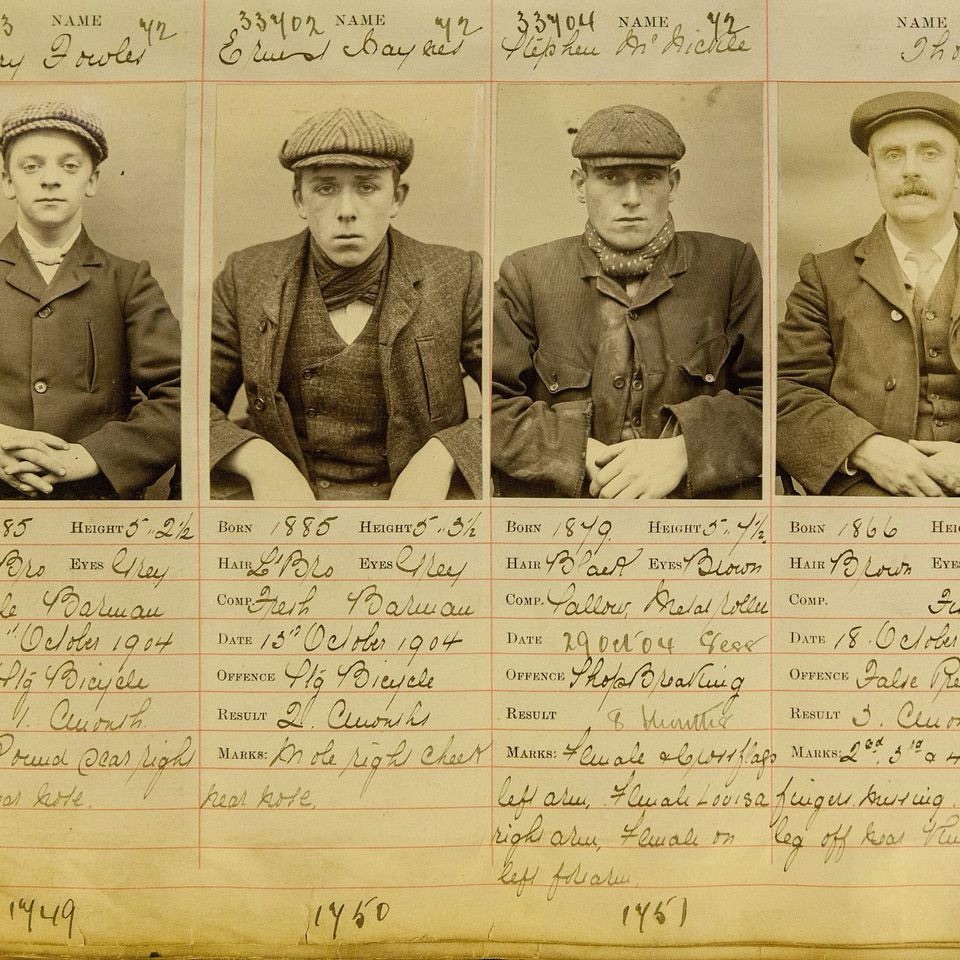
The lesson today was on gangs in the Industrial Revolution, such as the Manchester Scuttlers or the more local Peaky Blinders, so very interesting content.
After school: TCG Club
Over the past 6 years, I’ve dabbled in a number of different clubs. A colleague and I ran a ‘heroes and villains of History’ club a few years ago, where we’d cycle through some key individuals from the past – but this felt a lot like another History lesson. Then, I ran a student-led club, where two of my GCSE students wanted to do something similar.
But the only club I’ve truly loved running is a Trading Card Game club. Students are invited to bring in whichever TCG they enjoy playing – be it Yu-Gi-Oh!, Pokémon or Star Wars Unlimited – and challenge each other to battles. I run this alongside a colleague and we both bring in our own decks – starter ones for new members to borrow and those optimised for the meta – and often challenge the kids, too.
It’s a great way to end the start of the week.
After school: Exercise
I try and exercise five times a week – three times climbing and two visits to the gym. On this day, I opted for the gym, spending an hour doing a chest and shoulders combination workout.
The next day was a very sore one for me. Because I started the day fairly early, I was able to get there for half 4 and out of the building for half 5.
Home
I returned home for around 6pm and got straight onto the essentials: protein shake + dinner. Usually, I like to meal prep huge meals on the weekends to save time during the week, but didn’t get time since I’d been marking and then, you know, enjoying time off.
While my chilli was simmering, I sorted the dishes and put a wash on to make the most of the sunny weather and get some line drying in.
Then, once I’d eaten and hung up my clothes, I set myself up in front of the TV and wrote this blog post. I don’t like to work in the evening where I don’t need to and truly believe in the importance of maintaining your non-negotiable hobbies, regardless of your line of work.
When I first started teaching, I would try and leave early to then work from home, but found it harder to break away from whatever task I was doing and then get back into work-mode at home, so now I try and do everything that needs doing in the office – even if that means staying a little later than intended.
And with that, I’d set about my nighttime routine and settled into bed for 11pm to do a little reading and get 7 hours of solid sleep before doing it all again tomorrow.
Tell me in the comments: are you more of a work-from-home teacher or a get-everything-done-and-leave-it-at-work kind of person?
If you liked that, you’ll love…
- How to run a calm, high-impact registration: setting the tone in the 15 first minutes of the new term.
- How video games made me a more productive teacher
- How to build a sustainable reading habit in just ten pages a day
- How to stop your to-do list overwhelming your brain
- How to Clean up your Second Brain: a Guide to Digital De-hoarding
Follow my socials for more!

