I took another sip of the Sangria on my table, carefully paired with a generous helping of paella. The fruity drink and the crunchy prawns, balanced by the chorizo, was an explosion of flavour.
Leaning back, I took in my surroundings: a dusty, stone plaza, adorned with restaurants sporting several al fresco customers, all enjoying the same dish that I was. The chef was Valencian, so it was their speciality. A fountain trickled in the distance, framing the purple, yellow and orange buildings either side of my seat. The sun beat down upon my face as I took another bite, savouring every second.
The waiter approached with another bowl, claiming that it was ‘gratis’, or free.
‘Gracias,’ I said.
‘De nada’.
This is the life, I thought. This was Malaga, a Spanish city of Andalusia, and it was exactly where I needed to be.
Exactly where I did not need to be was glued to my phone screen at precisely 11pm at night, against the backdrop of a tired, wet England, desperately trying once more to save my streak on Duolingo. One lesson and then straight to bed; would I even remember the new vocab that I had just learned? By this point, I could read Spanish pretty well – especially while at the supermarket, getting in a food shop on holiday. But were my skills doomed to decipher the difference between orange juice with or without pulp forever? Could I really hold a conversation?
Probably not. Not if I only stuck with the apps. Self-paced learning is a fantastic way to gently approach a new language, but it’s got nothing on being taught by an expert. To make progress – proper progress – you need a human to speak with.
Trust me, I’m a teacher. If there’s one thing that I do know, it’s that having an expert in the room goes a long way towards increasing fluency, confidence and memorisation of key terms.
So, not so long ago, I decided to try and upgrade my language-learning process. Enter Preply – a language-learning service that connects qualified tutors with students, eager for new knowledge and new skills.
I had a wonderful time with Preply. You can read my full review of my fantastic tutor, Silvia, here. After 4 weeks of lessons twice a week, I walked away with a much wider vocabulary and a much better appreciation of how to hold a conversation.
But, in the current state of the world, it can be hard to justify spending £50 on learning a language. You need to be sure that you’ve chosen the right service.
That’s when I came across another fabulous language-learning tutoring service called Italki, who have stepped up to challenge Preply. So the question is, if you had £50 to spend on learning a language, which service would you pick?
This post is going to cut through the noise and look at systems, costs and features to help you figure out which you should opt for in 2026.
Disclosure: This review is a paid partnership with Italki but, as always, opinions, testing and critiques are entirely my own.
Core philosophies: How do both methods work?
Preply
A year since my first experience with Preply, it continues to go from strength-to-strength. The service operates like a gym membership: users sign up for automatic, monthly subscriptions, which works quite well for me. Like any habit, learning a language is easy to postpone until tomorrow, or the next week, or the week after. By keeping you locked in, you’re forced to take some accountability. This is great for building a low-friction, immovable routine, eliminating decision fatigue.
But what’s great is that there’s still a lot of flexibility. If you have an emergency, an unexpected bit of staff training, or a Parent’s Evening that you forgot was pencilled in, it’s pretty easy to reschedule, adjust how often your lessons occur, and even pause your subscription whenever needed. Preply really puts the learner first in this way – and I think that, ultimately, if that drives you to improve your language knowledge, and keeps you on the platform, actively learning, then you’re in the right place.
You just need to be absolutely certain that you can either commit to your pre-booked schedule or will remember to cancel/reschedule – otherwise those unused lessons will soon disappear. Preply are pretty confident of their system, though, and I think they have reason to be. A recent study confirmed that learners who use their system make progress 3 times as quickly as students using other language-learning software.
Italki
Preply’s competitor comes with total flexibility. The system works by buying credits which convert into individual lessons. As a result, users tend not to think of cash while planning their learning and instead focus on their target language. While there are lots of ways that the tutor is prioritised, Italki’s preferences to students means that you’re not locked into a subscription-based system.
While it is easy enough to cancel or postpone Preply lessons, it felt liberating knowing that I only had to plan a week in advance and didn’t need to commit to anything if I was too busy. If I needed a week or two off – for my schedule or for my holidays – I could do so without any fears or woes. My schedule truly felt like mine to control. There was one instance where I booked a lesson in for the wrong date but, following a request to my tutor, this was changed in a flash, and the new date was confirmed the following morning.
Any yet, that flexibility is perhaps Italki’s greatest downfall when it comes to learning. When I was using Preply, even if I’d had a busy week, I knew that I had to do my lesson. With Italki, if I hadn’t booked in a lesson, I wouldn’t have a lesson. Consequently, it was far easier to put off, put off, put off, deferring my habits instead of getting on with it.
Both methods have their pros and cons, so you should opt for the style that suits your schedule and learning habits the best. Preply’s the superior high-accountability system, whereas if flexibility is more important, Italki’s high-autonomy system wins out.
Booking in your first lesson
It’s no secret that both services offer high-quality tutoring.
There’s also little difference when selecting the right tutor. Regardless of your platform of choice, you’ll be able to search using a range of filters, tailoring the experience to suit your needs. Want a native Spanish speaker? Great, here’s the range to choose from. Learning a specific brand of Spanish, like Latin American? Fabulous, pick from these tutors. Not sure whether they’re the perfect match? Watch their introductory videos, read reviews and figure out whether you’ve got the right person.
Then, just see how it goes. Book in a trial lesson, experiment and witness a variety of teaching styles.
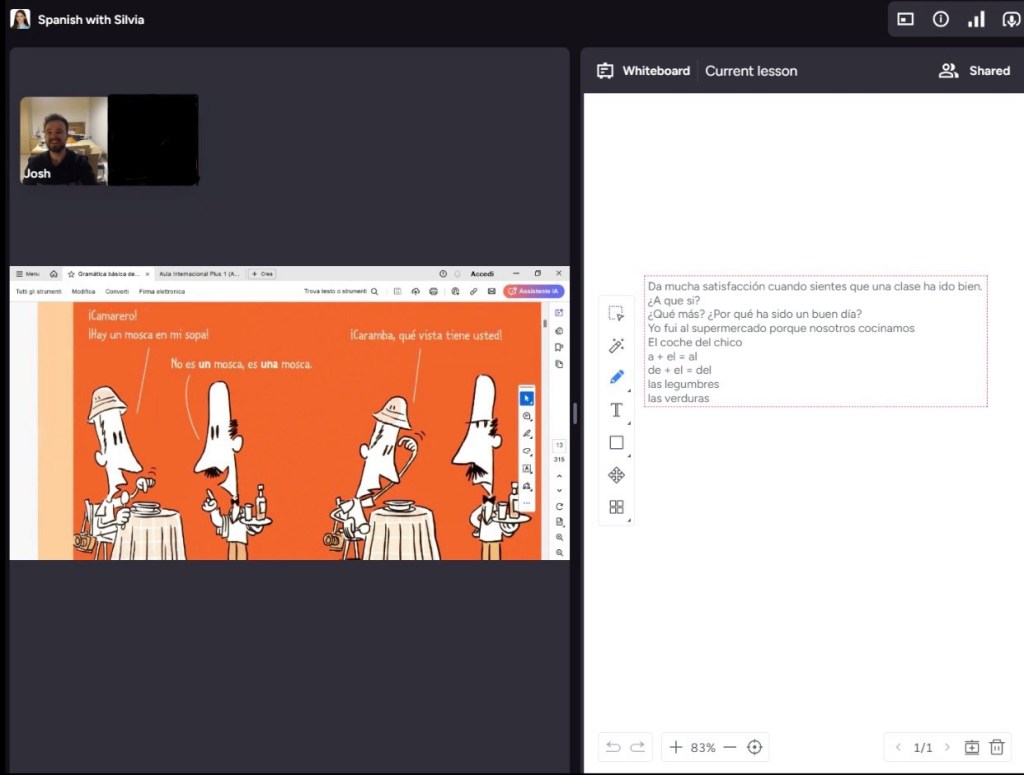
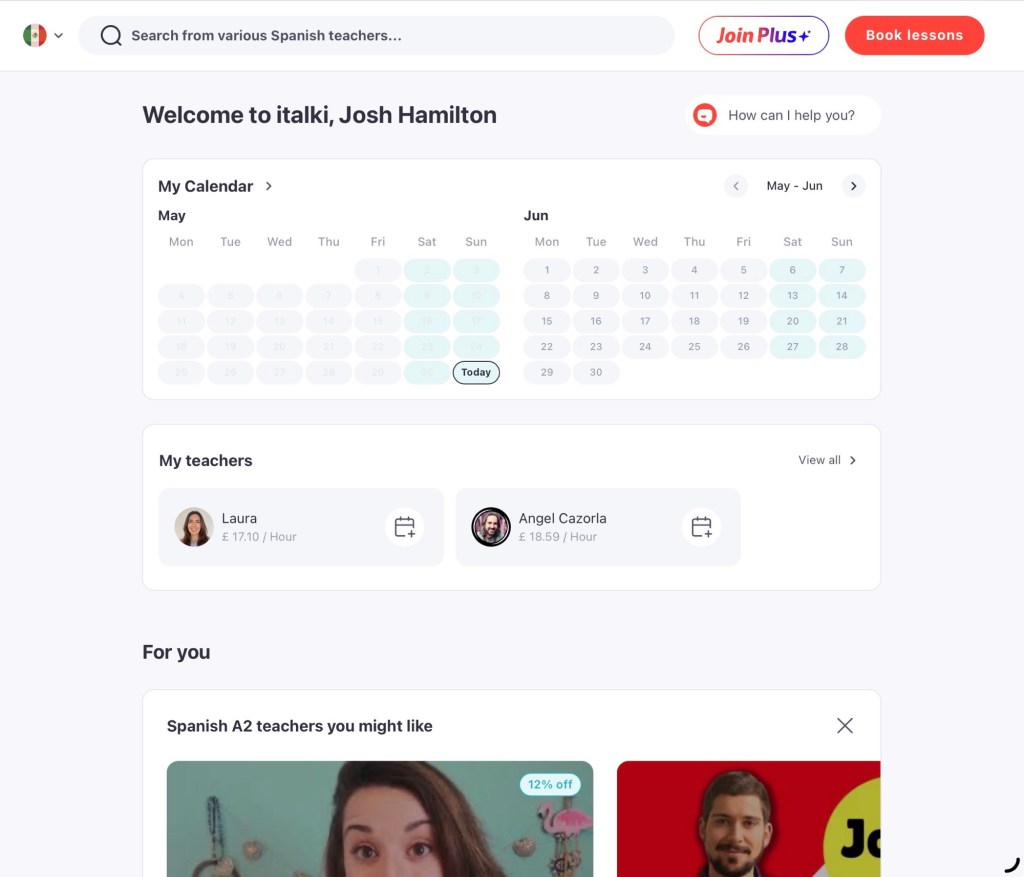
Or perhaps you’re not bothered about teaching styles. Perhaps you’re more interested in the User Interface and how a lesson looks and feels. Well, both platforms use native video spaces, but some tutors will opt for different software to spice up the experience. On Italki, I was put into Google Meet and Zoom rooms, which worked for me. We use Meet a lot for virtual assemblies, and you’ll probably do something similar if you have any semblance of a desk job, so it won’t take long to get used to. Tutors on both platforms will also send through resources that you used during the lesson, which is great for following-up your learning independently.
Where the differences do appear is how payments work. As a student, you’ll pay for the trial lesson in full. On Preply, the whole fee goes to them – but on Italki, the tutor still receives their cut. Platform ethics are really important to me, so I’m beginning to sway slightly more towards Italki.
On the other hand, Italki features hidden top-up fees, such as the small processing fee at checkout, depending on payment method. Using PayPal, this amounted to a few pounds. Preply absorbs all fees into the subscription costs, so if you want to spend exactly £50 on a lesson – no more – then you’ll be better off sticking with Preply.

The secret weapon – Italki’s Group Classes
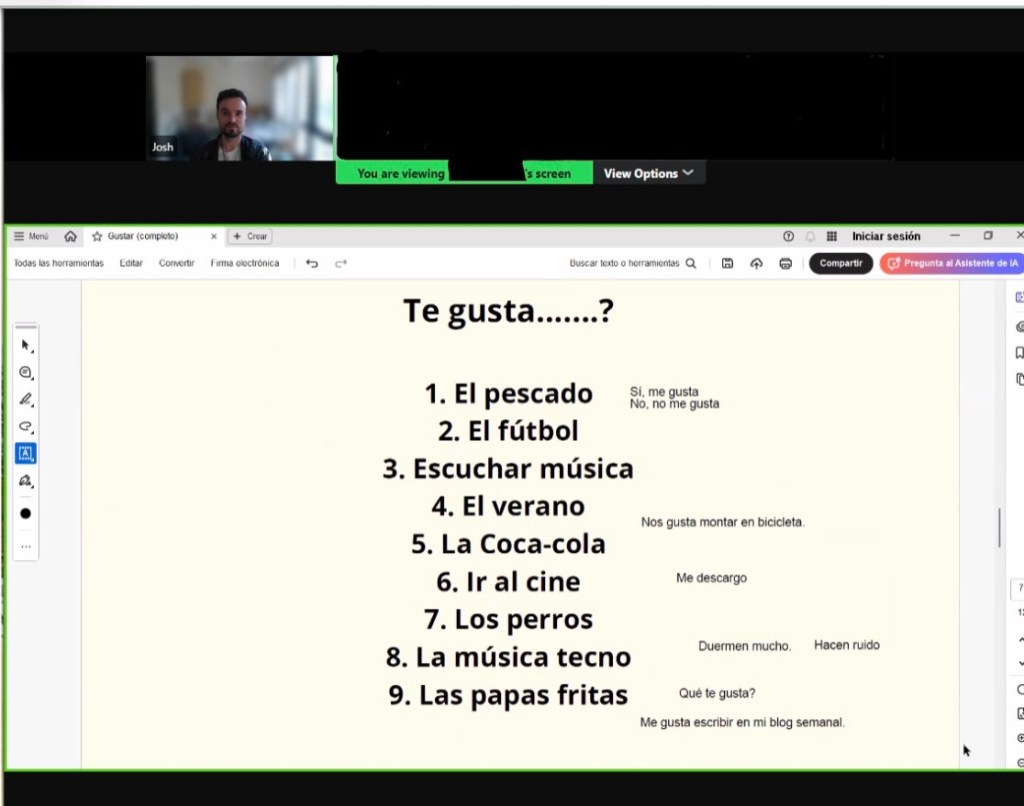
Italki’s group classes really help it to stand out. These are simply not offered by Preply, but its where the service really differentiates itself from other tutoring platforms. Each group class clarifies how many spots there are, when the class will take place and what it plans to cover, such as tenses or likes and dislikes.
As much as I like the 1-on-1 lessons, they are super intense. That’s not because they’re awkward or poorly planned – quite the opposite. The 1-on-1 lessons take so much brain power because I’m constantly expected to reply in Spanish.
Which, obviously, makes perfect sense, right? It’s what I’m paying the tutor for. But it doesn’t diminish the demands on cognitive load – the idea that people can only take on 5-9 new pieces of information at a time. As a result of doing so much heavy thinking, especially after a demanding 9-5, I’d be ending the lessons, regardless of platform, knackered.
Group lessons, on the other hand, gave me the opportunity to step back a little. There were still so many opportunities to get involved – either when the tutor asked me to contribute directly or because I had the confidence to deliver something myself – and then disappear back into the void. I’d wait and listen, giving others the chance to speak.
There were three big benefits to this method:
- I could hear how others responded to a prompt, giving me ideas about how to respond, including language choices that I might not have heard of.
- I could hear others struggle, just like me, which really made me realise that I was not alone in this language-learning journey. Everyone’s going at their own pace and it doesn’t matter if I’m not getting it right the first time, every time (because no one else does!). It feels like a proper community vibe, as if I’m at my local community centre and learning in an in-person group.
- Group classes dramatically lower the cost per hour.
With all of that being said, try not to romanticise the group classes too much. If you have a specific goal, like learning regional Spanish accents or making faster progress in speaking confidence, then you’ll still need the hyper focus of 1-on-1 lessons.
On top of that, looking at the average price of lessons, group classes lower the cost per hour dramatically. With that being said, try not to romanticise the classes too much. If you have a specific goal, like learning regional Spanish accents or making fast progress with your speaking confidence, then you’ll still need the hyper focus of 1-on-1 lessons.
So: 1-on-1 lessons are better for those high-friction, maximum cognitive exhaustion, rapid fluency gains; group lessons are the preference for low friction, shared cognitive load, and community and listening schema.
Preply’s Tech Upgrades
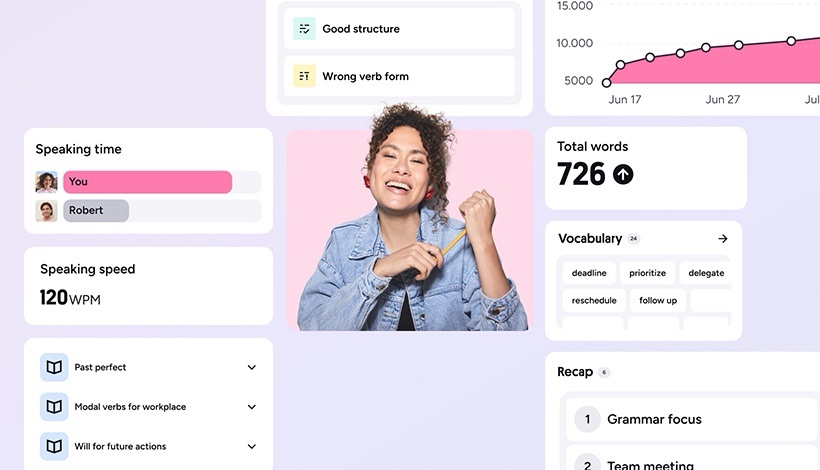
In the background, Preply’s been making moves. Earlier this year, they had a massive capital injection to scale human-led, AI-enhanced learning. Their AI co-pilot automatically creates lesson summaries, vocab tracking and vocabulary exercises tailored to your sessions. This is such a positive addition to the ‘homework’ that you can choose to do prior to each new scheduled class.
As a teacher, I can see the benefits. One of our biggest frustrations is not seeing our students enough, leading to them forgetting key information that they’ve been taught. You can only follow up on this knowledge with them in your next lesson and, if not done effectively, students will be easily susceptible to the Forgetting Curve, the phenomenon where, the longer it’s been since learning something, the more you’re likely to forget.
To retain knowledge, the most effective method is by interleaving it – such as asking students a question based on what they did last lesson, and last week, and last month. Doing this regularly enough will convert new knowledge from your working memory into your long term memory.
Those AI-generated summaries and exercises are a great way to retain what you’ve learned without necessarily having to do another lesson quite so quickly. It’s a great way to keep users on the platform long-term, rather than doing too much too quickly and burning out. It might also save you money if you’re spending more than you feel you can afford, just to keep hold of the new language.
Professional, Community and Super Tutors
Both platforms feature thousands of tutors who speak a range of languages (90+ on Prelpy and 150+ on Italki!) – and they also split their tutors into different categories.
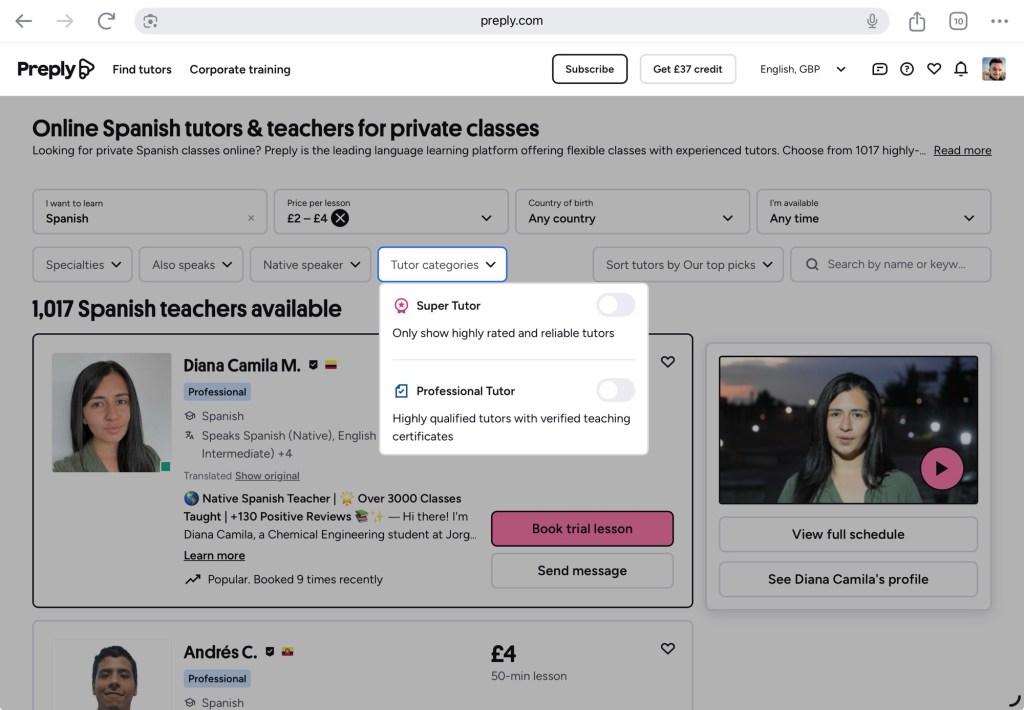
Preply likes to honour their Super Tutors – those with professional teaching credentials – with a badge. If you’re not professionally qualified, you’ll be badgeless, but also much, much cheaper. The average cost looks to be between £15 and £28, though you’ll get some who cost a lot more – and others without the credentials who are as cheap as £4 for their time.
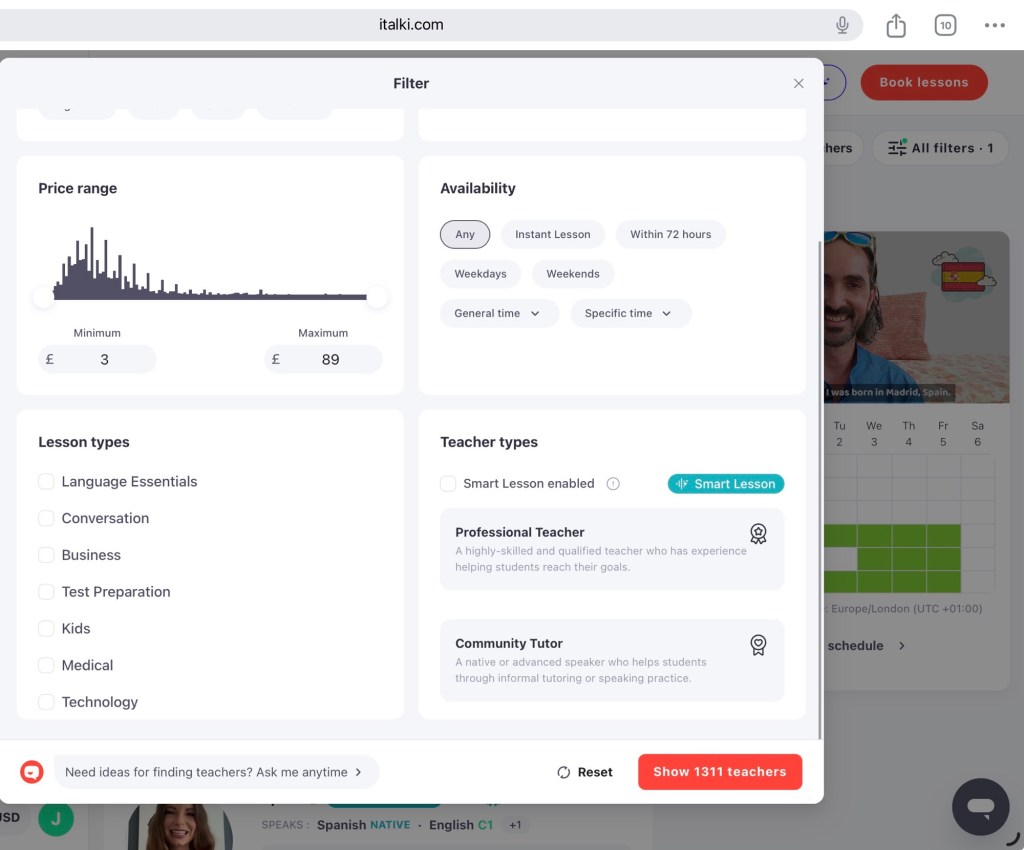
Italki, on the other hand, explicitly splits their tutors into Professional Teachers and Community Tutors, which are great for low-cost, casual chat. Personally, I’d always opt for those with teaching credentials. As a teacher, I feel like knowing the logic behind why teachers do certain things goes a long way in developing your experience with them.
With that being said, if you’re already fluent but starting to forget your GCSE or A-Level language days, topping up your skills with some casual conversation might not be such a bad idea.
The platform that you opt for might also hinge on how you feel about their commissions systems. Preply takes a 33% commission, sliding to 18% after a tutor has spent 400 hours tutoring students. That means that, for less experienced teachers charging, for instance, £10 an hour, they’ll be walking away with £6.70. Experienced teachers would take home £8.20. This is all before paying taxes, so that represents a significant portion, though this might be a benefit to the user, since it encourages tutors to stay on the platform long-term, offering higher-quality lessons.
Why should that matter to you? High platform friction can also drive elite talent away. You could see your favourite tutors migrating to another platform to take home more of the cut. Italki, for instance, takes a flat 15% fee from day one, regardless of how many hours a tutors has taught on the platform. It also only charges once a lesson has completed, which I appreciated – you’ll get a flurry of email check-ins asking how the lesson was and whether everything went okay.
Preply or Italki: which does it best?
Don’t overthink it. The best language-learning system is one that keeps you coming back. If you lack discipline and need a system to force you to show up every Tuesday at 7pm, choose Preply. If your calendar shifts constantly and you want cheap, conversational repetitions without a subscription, choose Italki.
What’s the most optimised for me? For individual 1-on-1 lessons, I’d go for Preply, for its subscription-based model and AI learning. To supplement with affordable group lessons, I’d opt for Italki.
Still undecided? Don’t forget to check out my full review of Preply for a more in-depth analysis.
For more information on how I work with brands, click here. Or, if you’d like to work with me, check out the ‘contact me’ section and get in touch.
If you liked that, you’ll love…
- How to run a calm, high-impact registration: setting the tone in the 15 first minutes of the new term.
- How video games made me a more productive teacher
- How to build a sustainable reading habit in just ten pages a day
- How to stop your to-do list overwhelming your brain
- How to Clean up your Second Brain: a Guide to Digital De-hoarding
Follow my socials!

