Discipline is tough. Sometimes, all you want to do is doom scroll or sit in front of the TV and watch Netflix. And yet, there’s that annoying presence in the back of your head that’s constantly screaming, ‘you’ve still not ticked me off your to-do list’.
That’s your brain making fun of you. It’s taunting you for doing anything even remotely unproductive and making you feel guilty for it. It’s time that we took back control and put a stop to that nonsense.
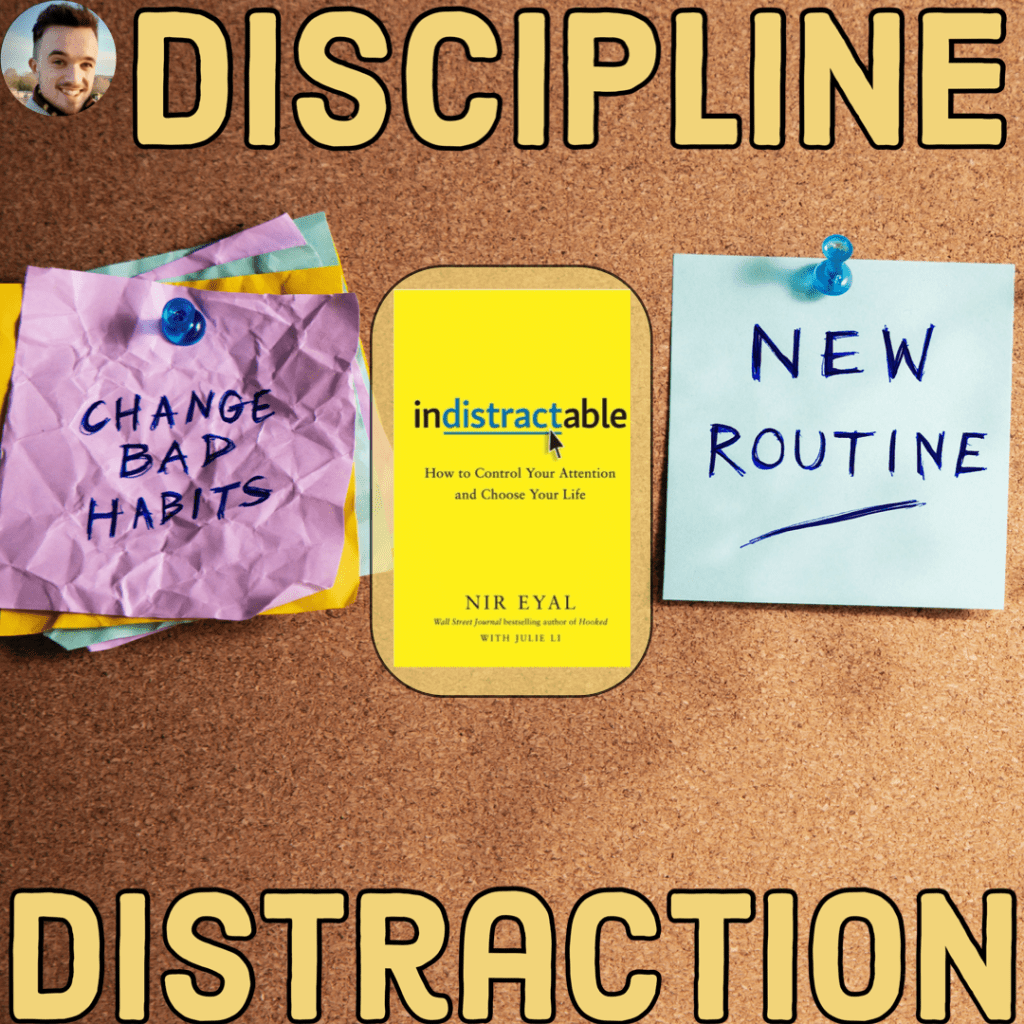
Because what would you do if I told you that distraction isn’t necessarily as evil as the internet makes it out to be? What if we could use it to our advantage if we know how? I recently listened to Deep Dive with Ali Abdaal, who was in conversation with Nir Eyal, author of the book Indistractable, whose comments on distraction really resonated with me. Here’s a whistle-stop guide to distractions, discipline, and some actionable steps at the end to help you to stay focused.
What are distractions?
That question might feel ridiculously easy to answer, but it’s actually a lot more complex than I’d ever realised.
My main takeaway from listening to Ali Abdaal’s conversation with Nir Eyal (on 2x speed, of course) was about the nature of distractions: what they are and how to take control over them.
A distraction, at its core, is something that takes your attention away from whatever it is that you wanted to do. It’s not necessarily inherently evil as long as the thing that you believe is distracting you is what you actually wanted to do.
I’ll give an example from my own life: I’ve been saying, for ages, that I want to go to the gym more frequently to build muscle and to write more, so that I can finally finish my novel. However, just the other night, I also wanted to watch 3 episodes of my latest anime addiction – Attack on Titan. So, instead of going to the gym and moving my body for an hour, I spent that time catching up on my new favourite show.
I had two paths to take here: do I feel guilt for not doing the thing that I wanted to do? Or do I feel happy that I accomplished my goal at that point in time, which was to sit down, relax, and watch TV?
I’ll put it another way: if you’re on a strict diet and eat really healthily for 6 days of a week, and then consume a whole pizza and a tub of ice cream, the person who curses themself for doing so is going to feel worse. However, the person who recognises their achievement at having eaten well for 6 out of 7 days in a week is going to feel pretty happy with their progress. It’s all about knowing how to reframe these things in a positive way.
Actionable steps to stay disciplined
In my opinion, staying disciplined isn’t necessarily about always consistently meeting your goals. You don’t have to learn a language every single day just because it’s on your to-do list or because you pay for Super Duolingo. Likewise, you don’t need to write 500 words a day just because it’ll help meet your writing goals, or pick up an instrument every other day to become a famous musician (I know I haven’t in a while).
To me, discipline is about doing the things that you want to do. If you want to watch a show for 2 hours after work, you go for it. If you want to spend 3 hours in the gym on the weekend, what’s stopping you? Do you want to spend 30 minutes after work on your phone, doom scrolling Instagram? Fine, as long as that is what you want to do.
However, if you want to spend hours in the gym and end up doom scrolling instead, then you can consider that a distraction that’s ruined your discipline. Here are some actionable steps that you can take to stop you from getting so distracted, straight from Nir Eyal himself:
- Master Your Internal Triggers: Start by managing the emotional discomforts—like stress, boredom, or anxiety—that drive us toward distractions. Recognize these triggers and find healthy ways to cope, like practicing mindfulness or reframing your thoughts. You could try to create a gratitude log to remind yourself of the things that mean the most to you.
- Make Time for Traction: Traction pulls us toward our goals, while distraction pulls us away. Schedule time for focused work, breaks, and even leisure activities. When your time is planned intentionally, distractions lose their power. Struggling? Try these strategies for time management.
- The Ten Minute Rule: When you feel the urge to engage in a distraction, rather than giving in immediately, tell yourself to wait just ten minutes before acting on it. During that waiting period, you can do something else productive, like taking a few deep breaths, journaling, or even addressing the discomfort driving your urge to distract. This small delay often diffuses the immediate need for the distraction and helps you develop resilience against impulsive behavior. Plus, it’s telling yourself that it’s okay to be distracted – just not right now. You are the one in control of your thoughts.
- Hack Back External Triggers: External triggers—such as notifications, emails, and messages—can derail our focus. Take control by turning off unnecessary notifications, setting clear boundaries, and using apps to block distracting websites during work hours. Take your phone for instance; you don’t actually need to know when your friend has messaged you on Instagram; instead, turn off notifications and then check yourself after work, rather than during the day.
- Prevent Distraction with Pacts: Create “precommitments” that make it easier to stay on track. Try effort pacts (adding a step to access distractions) or price pacts (introducing a financial consequence for getting sidetracked).
If you want to read Nir Eyal’s book and absorb more of his indistractable techniques, you can get it through this link, which gives me a small kickback at no extra cost to you.
What do you do to stay focused? I’m always after new methods and techniques to stay on task, so share them in the comments below.
 Hardly Hamilton
One thought on “How to become indistractible and stay focused”