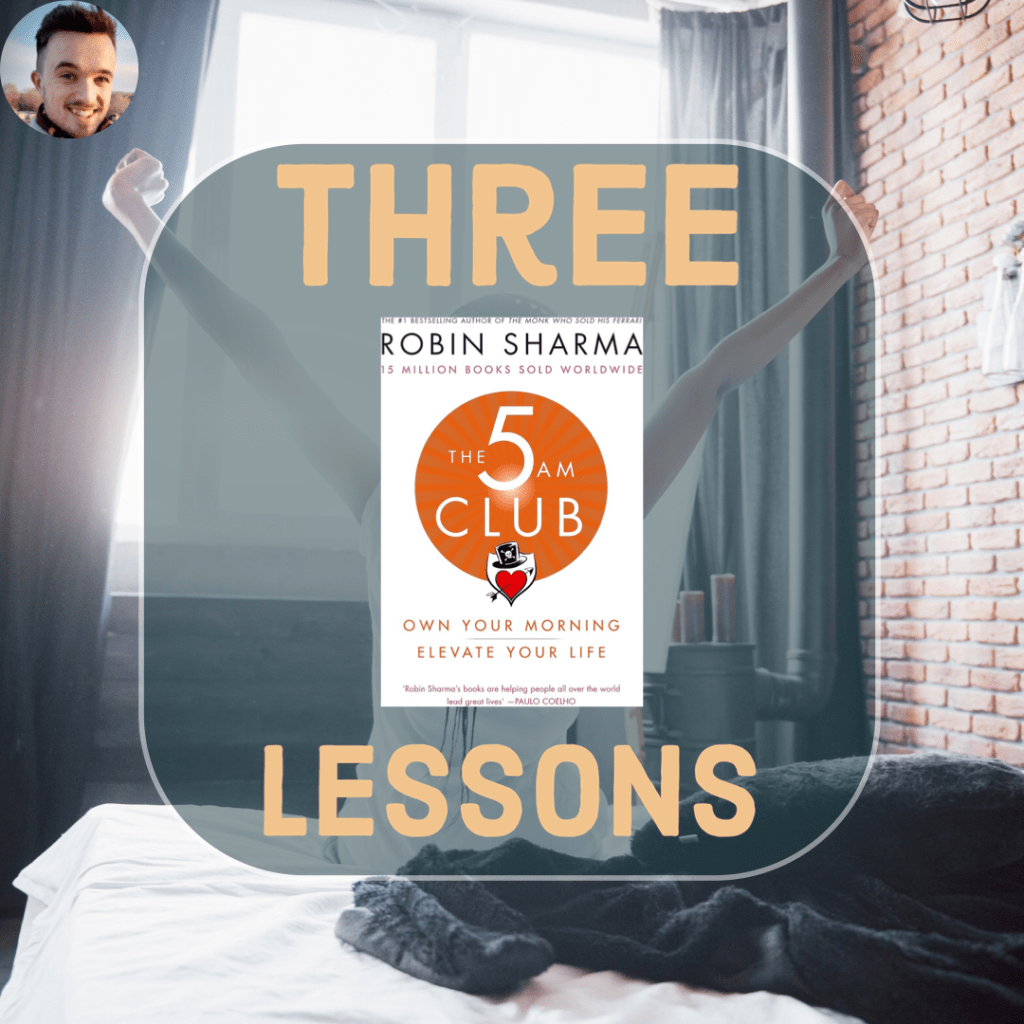
Robin Sharma’s The 5am Club is a weird one. When the first page played through my headphones on Spotify, I expected it to be your typical kind of self-help book. Very much in the vain of Atomic Habits or the Five Hour Work Week, setup to guide me through a few key messages to improve my life, chapter-by-chapter.
That is not the experience that I had while reading The 5am Club. Instead, you start off submerged in a story, and you’re taken through the life of an entrepreneur who feels that life just hasn’t been going her way. She meets a few characters at a group meeting, who are all invited to a billionaire’s island paradise. It’s here that she learns the secrets of the 5am club, a mindset shift aimed to rebalance her life and find purpose.
It’s a work of fiction that’s based on the teachings that Sharma, the author, employs as a personal success guru, so obviously it works really well for the main character. But you’d expect that; Sharma is trying to sell you a lifestyle, after all. My question, going into this pretty famous book, was simple: does it actually work? I wasn’t planning to actually start getting up at 5am; starting my day at 6 is bad enough. Are there any teachings that we can take away from this book and apply to our lives, though, without the unfathomably early start to the day?
The answer, of course, is yes. Here are the three realistic lessons that I’ve learned from joining The 5am Club – without having to wake up before dawn.
Realistic lesson 1: a consistent morning routine
Let’s ignore, for a second, that the central characters of Sharma’s tale have to get up, and meet each other, at 5am everyday. We’re not even going to consider changing our get-up time. Instead, we’re going to apply the principles that the protagonists learn by getting up at such an ungodly hour. Sharma really emphasises the importance of having structure to your morning routine. He suggests that getting up so early allows time for habits you’d otherwise ignore, such as exercise, meditation, and planning to set a positive tone for the rest of the day.
Surprise, surprise, you actually don’t need to wake up at 5am to be able to do that. What is really important is doing the same thing every single morning and doing it with purpose. Let’s look at the alternative first.
You could roll out of bed 5 minutes before you have to be on a Teams call, unshowered and barely conscious. You could get up an hour before you need to drive to work or catch a train, but all you do in that hour is zone-out and watch TV. Will it make you feel good? Maybe. That’s what we call productive procrastination. Will it get you closer to your goals, or how you want to feel about yourself?
Probably not.
Tonight, before you go to bed, try a few things for me: write down you want to accomplish tomorrow morning before starting the usual daily grind. Then, when your alarm sounds, get up as quickly as possible. Are you going to go to the gym, meditate, or read a book? Great! Do that!
Or are you going to go for a walk to get some fresh air and clear your mind? Fantastic! Do that!
Having a consistent morning routine will help you to feel more positive about the rest of your day. You’ll also feel as if you’ve started the day with time for YOU, rather than having to start by dedicating time to your employer, which is always nice.
Looking for inspiration for a morning routine? Check out mine here.
Struggling to get to bed on time? Take a glance at my nighttime routine to help you wind down.
Nothing to plan your day in? Get started with my complete Bullet Journal setup here.
Realistic lesson 2: Lifelong personal growth
I cannot tell you how many people I’ve met who finished school at 18 and stopped learning. Yeah, okay, they might learn new things at work by undertaking training, but that’s for your job, not for you.
I remember, when I finished University aged 21, I had a plan to go back for a Master’s Degree aged 30, and then a PhD aged 40. Life doesn’t always work out that way – and I actually went back to Uni a lot sooner than I thought I would – but many people seem to think that once you finish formal education, you shouldn’t do anymore. Once you’re done with your 9-5, you should retreat and stick on the telly or doom scroll.
Now, I’m not saying that you should give any of that up; I love to mooch in front of the box as much as anybody, but just try to cut down by, I don’t know, an hour a night, and try something new. Sharma talks about investing in self-education and seeking out mentors, and that’s a great idea, but don’t let the idea of educating yourself put you off. Literally just set aside five minutes, right now, and have a think about whether there’s anything you’ve ever desperately wanted to try, but never got around to doing.
Got it? Good. Now set aside however much time you’d like every day, or every other day, or every week, and do the thing. Dedicate yourself to learning something new to keep our brain ticking over, or maybe to develop something into a side hustle, or even just to have a bit of fun. I’ve spent time learning the ukulele, writing creatively, and coding. So why wouldn’t you spend a bit of time trying out a new habit?
Realistic lesson 3: The 20/20/20 split
Sharma is a huge fan of nailing down how you should use the first hour of your day. He advocates for the 20/20/20 approach, which means that the first 20 minutes of your morning should be for exercise. It could be yoga, or climbing, or HIIT, or for any number of physical activities. I like to use the iFIT app for a whole host of different things to keep my body guessing what exercise is coming. However, there’s no need to work yourself like crazy just after you wake up every single day of the week. I work a full-time job, so all I have time to do before setting off is a set of press ups, sit ups and squats. I’m challenging myself to do as many of those for every day of the month – so on the first of Feb, I did 1 rep of each – and by the end, I’ll be on 29.
I usually save up the rest of my exercise time for the end of the working day, and I like to track my work on the app Strong, which I’ve reviewed on this link over here.
Right now, I’m using the MadFit workout playlist if I’m short on time:
Once you’ve moved your body, Sharma suggests spending another 20 minutes reflecting and preparing yourself mentally for the day ahead. You could meditate or ‘visualise’, but I like to update my Bullet Journal, especially if I’ve not had time the night before. I set goals for the day ahead and track what I’ve been up to the day before in a sentence, and tick off any habit goals that I managed to meet. By spending time on mental reflection, you’ll be able to centre yourself and build a positive mindset for the rest of the day. Short of time? Just create a to-do list of your days’ goals to get them out of your brain and onto paper – then you’ll never forget about what needs doing.
Finally, you’ve got 20 more minutes for learning and personal growth. Maybe you’ll read a book, listen to a podcast or build a skill. Whatever you do, you’ll be setting aside time to develop new skills that could so easily slip away in the tiredness we all experience at the end of a busy day. For me, I like to do this on the way to work. I’ll play a podcast or audiobook and learn something new before getting down to the business of teaching History.
Regardless, by following the 20/20/20 method, you’re guaranteeing that you won’t just dedicate your life to your job. Instead, you’ll be dedicating your life to, you know…your life.
To join The 5am Club and purchase it through Amazon, click here. #ad
If you’d rather start reading Atomic Habits first, click here. #ad
And to purchase The Four Hour Work Week, which was remote work before it was cool, click here. #ad
What have you read recently? What have you learned? Any recommendations? I’d love to hear them (and read them) in the comments below.
If you liked, that you’ll love…
- Reclaim your evenings: A Busy Teacher’s Guide to Healthy Meal prep
- 16 incredible books to read in 2026
- How to actually achieve your goals in 2026: The Anti-Resolution toolkit
- The First 90 Days: How to survive (and thrive) as a new Head of History
- 7 Brutal Questions to Course-Correct your Life before 2026
Follow my socials!
 Hardly Hamilton
2 thoughts on “Three realistic lessons from joining the 5am Club”