A teacher’s main job is in the classroom. It’s in front of students, at the front of a room, delivering a lesson. I spend about 21 hours of my time doing just that, trying my hardest to inspire the next generation.
Or to at least make them listen to another story about Henry VIII.
But it’s not like I get to simply turn up for those 21 hours, every single week, and then go home again. Most UK workers are in the office for 37.5 hours, if not longer. Teachers are notorious for doing far, far more than that, too, with some data suggesting that teachers work an average of nearly 47 hours a week. So if I’m only teaching for 21 hours, where do those extra 26 hours go? What do I spend all of my time doing?
Well, marking, for one. And the rest? Like many office workers, I’ll be glued to my screen. I’ve spent many a late night – particularly in my training and ECT years – staring at my screen for hours as I add the finishing touches to my lesson plan.
Those late nights will soon add up. If you’re constantly spending all of this time staring at a screen at a time when your body’s natural circadian rhythm is telling you to go to bed, you’re going to feel washed out. You’re going to feel drained. Even worse: you’re going to feel tired and yet far too wired to even attempt sleep.
And then? Then you’re up even later trying to nod off, despite the knowledge that Year 9 will be seeing you first thing tomorrow morning.
What if there was a solution? What if you could wake up feeling well rested, in spite of spending all of that time on your laptop? Better yet, what if you could reduce any and all eye strain during the day while you’re working? Potentially even prevent those pesky migraines?
What if I told you that I had the solution?

The Solution
I realised that I couldn’t change the marking pile, so I had to change the system that I used to tackle it.
That solution is tinted, blue light glasses. Read all the way to the end for an exclusive 15% off of the ones that feature in this review.
I know what you’re thinking: a couple of years ago, I gave you this solution already. You’ll remember that I raved about using orange glasses for reading in bed and red glasses for totally shutting off prior to and during my flight to Canada and back. I still stand by those reviews and use both pairs almost daily.
However, while those glasses are great for winding down for the night, they’re just too powerful for use during the day. If I pop them on while writing this post, for instance, I feel like my body is trying to shut down for sleep instead of staying switched on and focused. Great for their purpose but not for what I need while I’m trying to lock in on some work.
Thankfully, Gloojo, a company dedicated to improving focus and sleep through their blue light glasses, decided to reach out. They sent me a pair of their newest glasses in return for an honest review.
Of course, I gladly accepted – but they wouldn’t be for me. These glasses were designed specifically for people who already wear glasses. They fit on top, like an overlay, allowing glasses users to continue to wear their usual specs without having to invest in new, specially-tinted, pairs for each occasion. Most blue light solutions assume that you must have 20/20 vision or want to faff about with contact lenses, so these are a welcome change for glasses-wearers.
So, like any sane human being, I donated them to my partner, who has worn glasses for practically all of her life. She works in tech in a remote job and, if we decide to play games in the evening, that’s more than 8 hours of screen time per day.
All of this makes her migraines way more likely. So, how did the glasses do?
The System
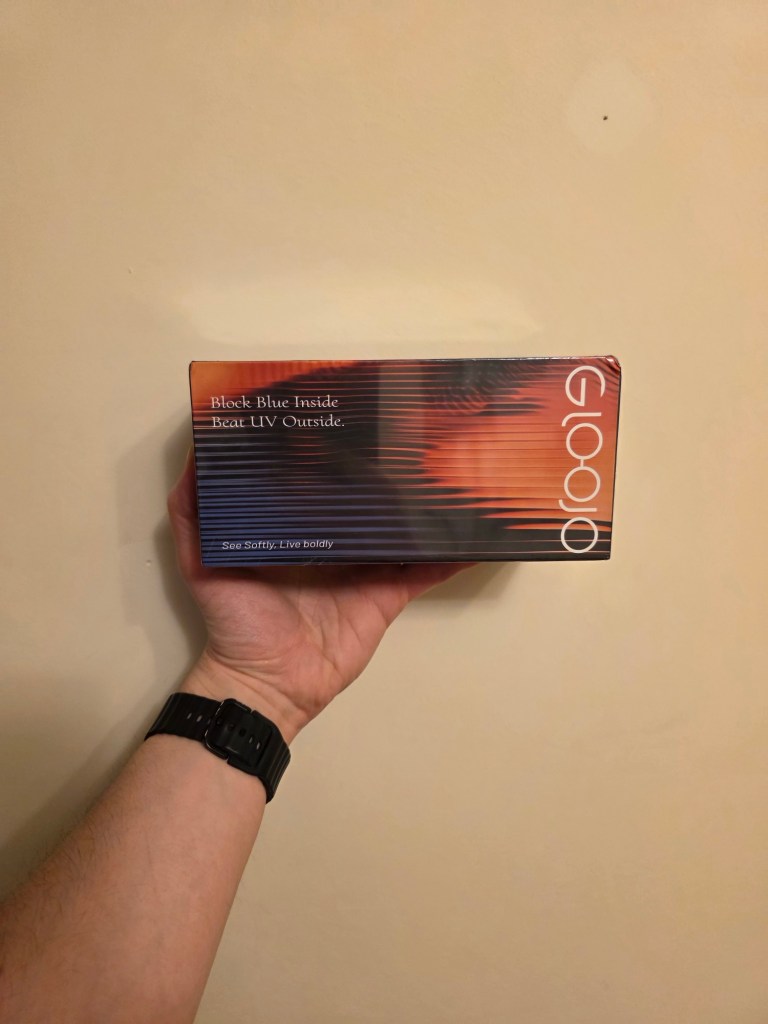
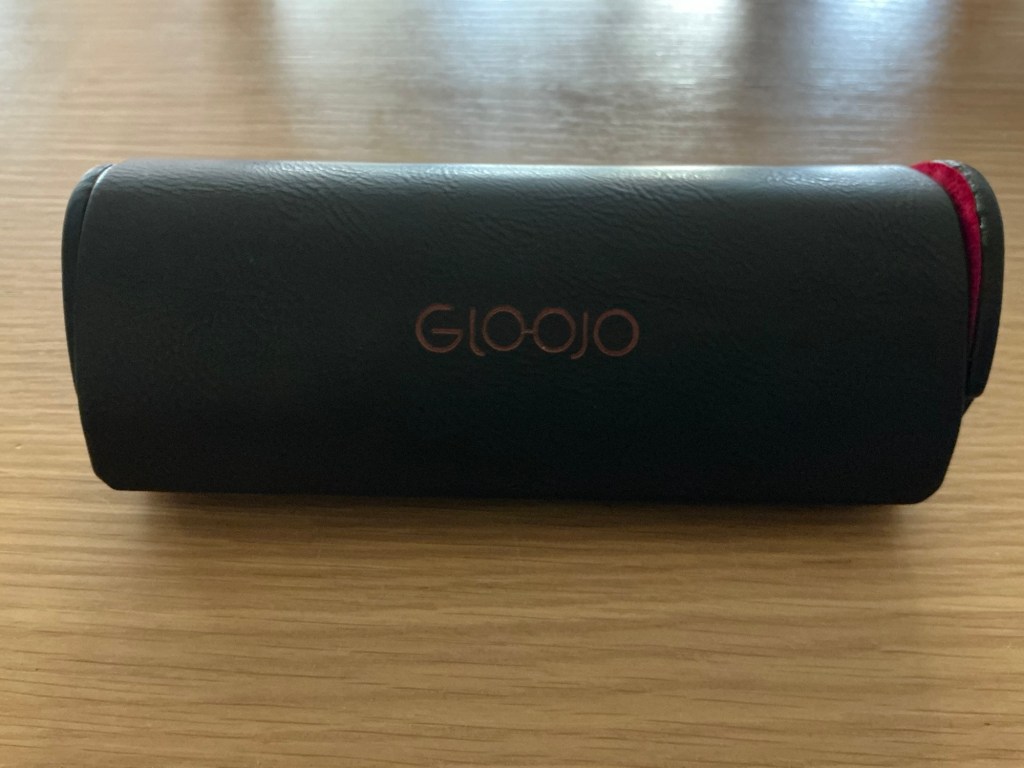
The unboxing experience for these glasses was really smooth. They come in a gorgeous, hard case, which I think is an upgrade on the ones that mine are stored in. When we’re staying away from home, she knows that she can throw them into a bag without the worry that they’ll get smashed or scratched.
Once you put them on, you barely notice them; these aren’t heavy at all, which was her main concern, since you’re doubling the weight on a pretty small surface area that is the bridge of your nose. They are pretty large, which brings with it pros and cons. On the one hand, such large glasses mean that they’ll fit over the top of pretty much any pair of glasses. On the other hand, prepare to receive many, many comments comparing you to the likes of Ali G, Stevan Segal, and even Robert Downey, Jr. Especially if you work in the office everyday.
While the glasses did comfortably fit her reading glasses, my partner said that the perfect solution would have been a custom-made design that matched their exact dimensions. This was probably asking for too much, though, especially if she ever decides to change her frames again.
In terms of the visual shift, the difference was more subtle than she anticipated. You put them on and it looks like everything has taken a slight downshift, as if an eclipse is just starting and the lights are beginning to turn down, just not all the way. Like using a smart bulb to dim the Big Light to 25% brightness.
And the impact of these specs? Wow, okay, yes – this one is huge. Historically, she would suffer with quite bad migraines. Now? A thing of the past. If you’re someone who loses three days a month from a migraine, a pair of overlays is a low-friction experiment compared to another round of paracetamol. Why not see if it works for you?
As for her sleep? Sadly, not impacted in the same way that mine was. But I think that this conclusion makes sense: orange glasses block out more blue light than yellow glasses. Red specs will block out blue light the most, and blue light is responsible for inhibiting the body’s natural production of melatonin. This is the chemical that helps to induce sleep, so if yellow glasses are blocking out less blue light, it adds up that they’d be less effective at promoting higher-quality sleep.
Instead, her headaches were down and her focus was higher than ever.
The Teacher Stamp of Approval
Of course, I couldn’t let my partner have all the fun. I also tried out the glasses for a few evenings when I knew I’d be working late (it’s currently exam season, so all hands on deck!) and was very impressed. Upon putting them on, I immediately felt this weird sense of calm. Perhaps it was a bit of a placebo effect – I knew that my partner had a good experience and was expecting the same – but the impact was staggering.
Whenever I finished tweaking my PowerPoints, I’d walk away from a screen feeling a lot less fatigued. There’s a certain ‘dry eye’ feeling that you tend to get from working with screens, but my eyes felt fresh for focusing on my nighttime hobbies, like climbing, which requires a lot of coordination. While I did need to remove them once or twice to check for accurate colours in my worksheets, the yellow tint was the perfect shade for most tasks.
You’ll probably see a lot of debate over blue light glasses online, with some singing their praise and others doubting the science behind them. But, you know what? I always think that it’s best to rely on stories of real people who have tried these things and noticed a stark difference.
While you can use these glasses as a non-glasses user, I’d recommend sticking with Gloojo’s standard range if you’ve also been blessed with 20/20 vision, since the regular range doesn’t need to accommodate for an extra pair of glasses and is therefore more suited to your face.
Are you a late-night planner or an early bird marker? How are your eyes faring by Friday afternoon? Let’s talk in the comments.
Click below if you’re interested in Gloojo’s range of glasses, and use the code JOSHVIP15 for 15% off at checkout:
If you liked this, you’ll love…
- How to run a calm, high-impact registration: setting the tone in the 15 first minutes of the new term.
- How video games made me a more productive teacher
- How to build a sustainable reading habit in just ten pages a day
- How to stop your to-do list overwhelming your brain
- How to Clean up your Second Brain: a Guide to Digital De-hoarding
Why not follow my socials? Be the first to know when I post:

