I’ve been using Duolingo for over 1200 days. I’ve demoed the premium version, Super Duolingo, and how it powered up my learning. I’ve also spoken extensively about how I’ve used it to level-up my language learning in the past year.
But when I went to Spain last year, and the taxi driver laughed at me for my limited vocab (I promise it was all in good spirits), I realised that talking to a intimidating virtual owl all day wasn’t going to cut it. I want the very best out of my learning and was determined to take the language-learning process that one step further. I’m the same when it comes to any goal that I set. How could I enhance my Spanish proficiency?
The answer felt obvious: I looked into taking regular Spanish classes. My friend does the same to learn Irish but, wherever I looked, tutors were asking for extortionate fees. Look, I get it: you get what you pay for – and if I wanted to become fluent by the end of this year, maybe I should invest in expensive lessons.
All of these thoughts raced through my mind, but one point stuck with me that really put a dent in my plans. Could I seriously commit to a dedicated hour or more a week? I already work long hours as a teacher but have fostered a pretty good work-life balance that lets me to do the hobbies that I love, like writing this post for all of you, semi-regularly.
How would a dedicated extra hour of tutelage fit into my busy routine?
That’s when I came across Lingopie, the solution to all of my problems.

What is Lingopie?
You know when you come home from work, knackered beyond belief, and slump into a recliner to watch Netflix? Have you ever considered doing that, but watching your shows in a foreign language?
That, at its core, is how the first level of Lingopie works.
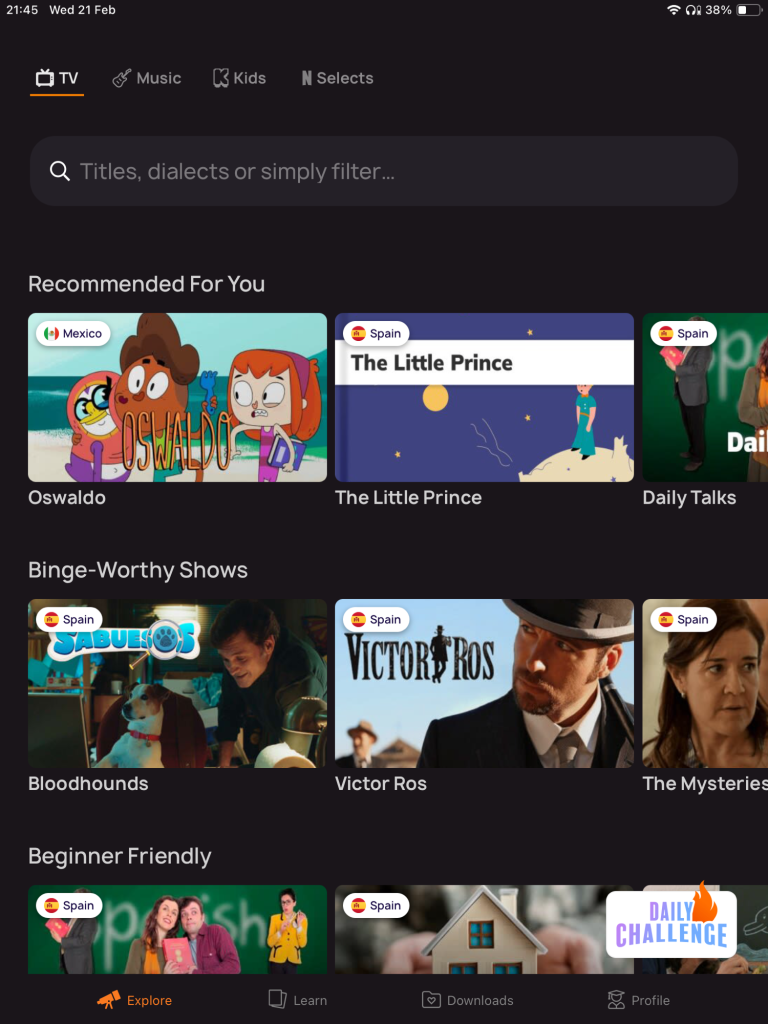
The service provides learners with hundreds of bespoke shows and movies with dual subtitles, one set in your native language and one in your target language. This might not feel like a lot, but I cannot tell you how much this helps with comprehension. My own language skills are at a decent enough point where I’d be able to follow along with the gist of some conversations, but there are words I’ve never even heard of; conjugations I’ve not yet tried. Some sentences will completely throw me, even if I try my hardest to listen in when our taxi driver answers the phone while ferrying us to our Spanish apartment.
That’s not the case on Lingopie.
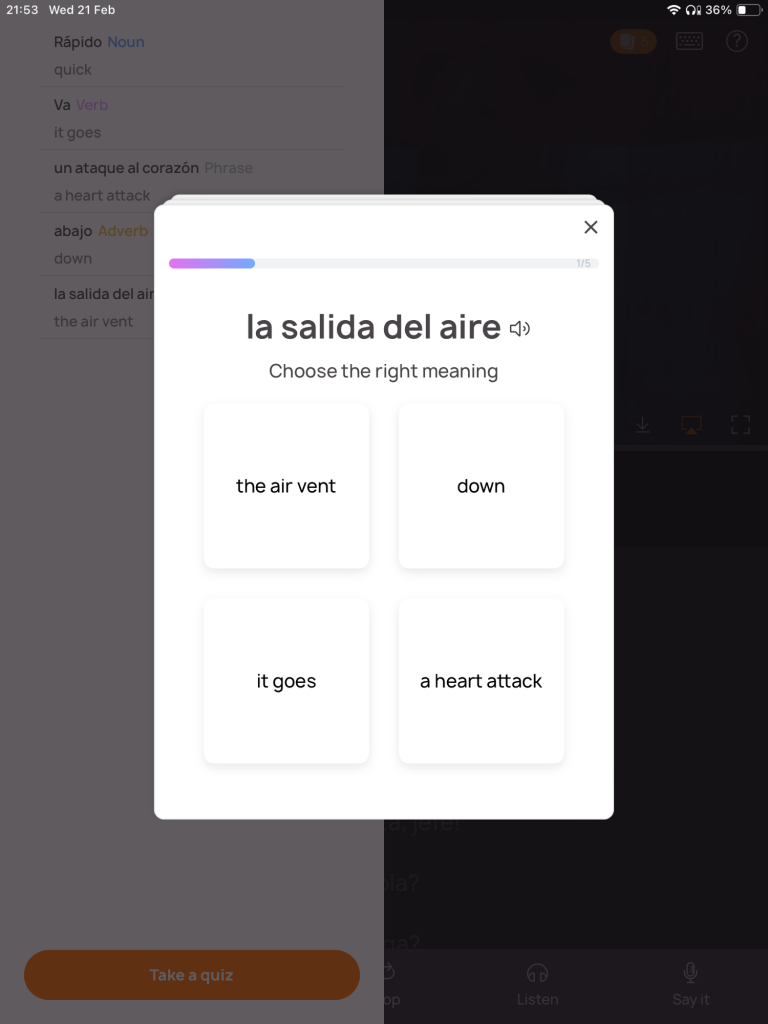
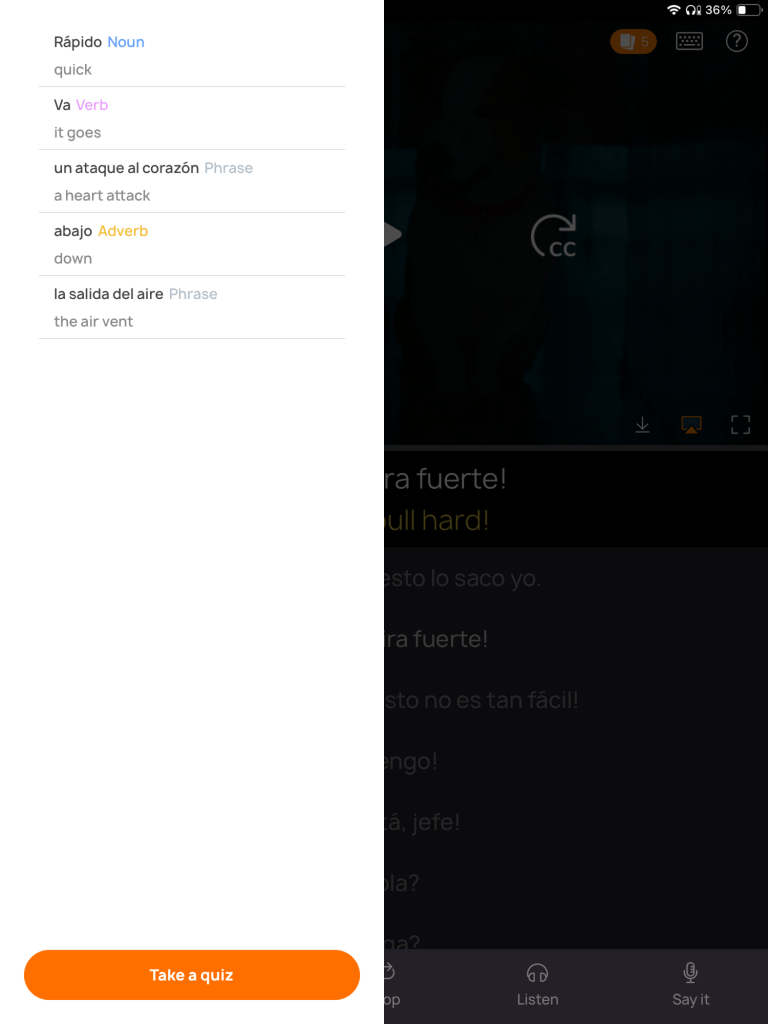
The dual subtitles means that I can easily understand what’s happening on screen. I can pause and tap on any unfamiliar words and add them to a word bank which form a revision bank of sorts. You’ll then get tested on any words in your bank after exiting the show, giving you opportunities to practice regularly.
From my perspective as a full-time teacher, regular interleaving practice is crucial – and this is a great way to offer users low-stakes tests.
If you want to go over any words in your TV show again, you can scroll through the transcript, tap the word, and it’ll take you straight back there, giving you opportunity to hear the phrase again and again. You can then tap to practice the phrase yourself; Lingopie stores your voice briefly so it can determine how accurately you spoke, and you can listen to yourself back.
It’s really cool. I love Duolingo, but at present its speaking exercises will just tell you whether you were accurate enough to pass or not. Getting to hear how you personally pronounce words and phrases is such a useful way to learn how to tweak your pronunciation.



One-on-one Lingopie tutors
Are the video aspects of Lingopie great? Absolutely. Having the excuse to sit down in front of my iPad and do something productive like learn a language, rather than watch How I Met Your Mother all the way through for the 16th time, is going to help me achieve my language goals in an easy, relaxed, way.
But the real draw is the included tutoring service. Lingopie offers a range of real-time session with real-life tutors at no extra cost all throughout the day. As a result, you’ve got the chance to join a lesson during your lunch break, or after work, or just before you go to bed. Anyone on the app can join in, meaning that you could be partnered with anyone from all over the world.
I tried out my first tutoring session on Lingopie the other week. I was paired with a tutor and one other student. It was a fully hands-on experience – more than I’d expected, actually. I’d anticipated being sat with a camera turned off, with a couple hundred of us listening lecture-style. I’d even warmed up my dinner to eat during the lesson.
Instead, that dinner was staring at me for 55 minutes as the tutor engaged us with a variety of tasks, where she explained and modelled, demonstrated, gave us time for independent practice and to review our work. There was even a plenary of sorts!
Clearly, these lessons are very well put-together and the tutors are of a great quality. I came away from the sessions feeling energised, excited and – if you will – muy feliz.
The Lingopie language-learning routine
I won’t lie to you: I don’t use Lingopie every single day. Sometimes I do get home from work and all I want to do is switch off and switch on the telly (and watch it in English!). Sometimes I want to do some exercise or get a head-start on tomorrow’s tasks.
However, whenever I can during the week, I try to watch a couple of episodes of Lingopie’s short-form content. They’ve got some shows that average ten minutes in length and are great for some quick mid-week learning.
Usually, Lingopie is priced at $5.99/month in their yearly plan, $12/month in their 3-month plan, and $199 for a lifetime subscription. You can also try it free for 7 days to see if it’s your cup of tea.
Have you ever used Lingopie? How do you learn languages? Let me know in the comments below.
If you liked that, you’ll love…
- Reclaim your evenings: A Busy Teacher’s Guide to Healthy Meal prep
- 16 incredible books to read in 2026
- How to actually achieve your goals in 2026: The Anti-Resolution toolkit
- The First 90 Days: How to survive (and thrive) as a new Head of History
- 7 Brutal Questions to Course-Correct your Life before 2026
 Hardly Hamilton
5 thoughts on “Does Lingopie work for language learning in 2024?”