It’s August. How? How has the year flown by so quickly, our lives trotting along? The excitement of New Year’s resolutions will have long since faded by now, so what better time to take a pause just as the second half begins? We’re more than half way through the year, with Christmas and the New Year not far off, so it’s time to reassess how it’s been going and take stock of what’s worked and what’s not, and to make changes wherever they’re most needed.
What I’m talking about is a mid-year audit. Audits are usually carried out by these big, scary, governing bodies to ensure that an organisation is sticking to its vision and values.
That’s what you’re going to do – except, it’s going to be to yourself. Mid-Year Audits aren’t about judgement or regret. They’re not about realising that you’ve not done something right, but instead about taking stock and making sure that you spend the rest of the year getting something right. It’s a chance for clarity, recalibration and intentionality. It’s a chance to stop running on autopilot.
We’re going to spend the rest of this post running a Mid-Year Audit on You, Your Habits, Finances, and set Intentions for the rest of the year.

Level 1: The Personal Audit
What could be more important than your personal wellbeing? If this part of your life isn’t going according to plan, the rest of your life may be out of whack too. Spend time focusing on this area first if you want any kind of chance at resetting the rest of your world.
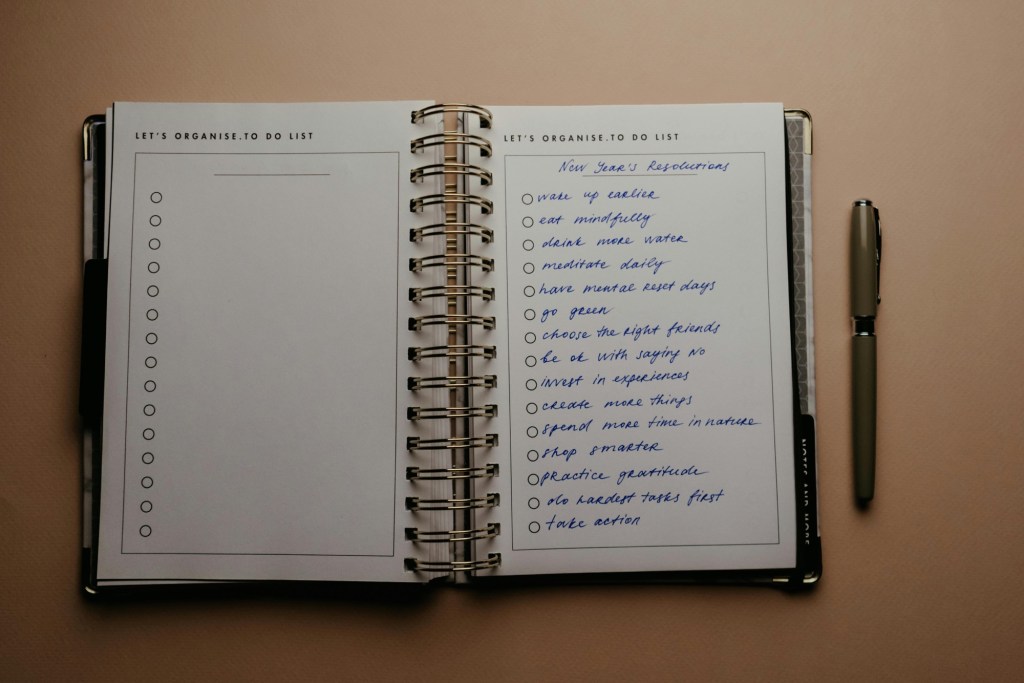
Start with reviewing your initial goals. Return to the Resolutions that you may have made on the turn of the New Year, whether they were personal, professional, or focusing on wellness. You may have even turned your head more towards hacking your brain chemistry, if you read my post on our key brain chemicals from earlier in the year. Consider your successes first so that you start as you mean to go on; celebrate those wins, and let your successes be known! Then, consider where it was that you fell short. Try not to frame these as failures, but as learning opportunities. What will you do with this information going forward to make small, marginal gains?
Then, ask yourself: where is your time and energy going? Are you spending your time where you want to, or are you consistently doing things that you’d rather not? Think about using a pie chart metaphor to help; the answers may well surprise you. Perhaps you think that you’re devoting enough time to a side hustle everyday, but never feel like you’ve got enough done. Turns out, once you’ve created your pie chart, you might find that you’re only spending a fraction of the time on your hobbies or projects.
Thinking about these activities, what do you find the most draining, with little return? Are you spending all day in unproductive meetings, or mindlessly doom scrolling? Do you enjoy those things? If not, is there a way to reduce them? Equally, which activities give you the most energy? Can you try to incorporate more of those into your life?
Finally: the wellness check. How is your physical health? This one can be massively impacted by your sleep and exercise regimes, so it’s imperative that you get on top of these. That doesn’t mean going to the gym and drinking protein shakes everyday; exercise could be as simple as a daily walk or as complex as taking an exercise class. A well-moved body can, in-turn, positively impact your sleep. Getting your sleep in order can actually be solved really easily if you put your mind to it (sleep conditions notwithstanding). Click here to read all of my killer strategies to getting the best night’s sleep of your life. Getting your sleep and exercise routines sorted could also have a massive impact on your mental health, including reduced stress levels.
Are you doing enough to promote mindfulness, too? Do you have a creative outlet that you can turn to? If these things help, and bring you joy, then they can be fantastic ways to avoid burnout.
The You Check-In is the most important part of a mid-year audit, so it’s critical that you spend a good amount of time here to ensure that your health and wellbeing is in order before you’re ready for the next step.
Level 2: The Habits Audit
Once you’ve assessed your personal wellbeing, you’re ready for the next level: the Habits Audit. This audit will help to ensure that you get where you want to be by setting systems in place to guide you there. So, the first thing to consider is reviewing how you track your habits. Is this something that you already do? If not, why not? I track all of the habits that I want to do everyday in my Bullet Journal. It’s a great way for staying on top of what I want to get done, such as exercising and eating healthily most days of the week, or doing my Spanish lessons on Duolingo everyday.
Then, consider what tools you’re using to track these things. While the Bullet Journal works for me, this might be completely ineffective for you. I did try a digital BuJo once upon a time, but found that it was far too much effort having to load up my iPad or phone to log that I’d been to the gym. Perhaps you’d do better using a series of post-its around your screen, and ripping one off represents completing a task. Maybe you’d rather track each habit on a massive whiteboard in the middle of your living room, or simply telling an accountability partner about your daily habits. Try a series of different tracking systems and figure out which works best for you.
Finally, you should think about where you’re absorbing your information from. I remember reading a lot of news on Twitter around 2021, and feeling very down about all of the horror stories that were flooding the app. That’s because I had a poor information diet. It’s just as bad if you get your news exclusively from the likes of the Daily Mail, which has long since been flagged as an unreliable source of information. Absorbing more positive stories – or at least ones with much less of a bias – could have tremendous impacts on your mental health, leaving you in a much better state of mind to work on your habits. Even better if you can reduce your screen time altogether.
Level 3: Finances & Future Audit
How are your finances looking? I’ve read online that you should invest in everything between you and the ground (so: your mattress, pillows, shoes, and socks, to name just a few), but is your cash going elsewhere? Are you spending your money where you’d like it to be spent? It sounds silly, right? But you’d be surprised – it’s so easy to spend where you’d rather not. Have a sit down and and check your online banking apps to reveal what you’re buying, and how you feel about that. You might be really happy about your spending, or you might feel your stomach drop. Some banking apps, like Chase, even break down your spending into different sections, which makes this part of the audit really straightforward.
Either way, it could be a massively eye-opening experience for you.
When you’ve got a good understanding of your finances, and have even redirected some of your unnecessary expenses, it’s time to look towards the future and have a learning and skills check-in. Is there something new that you’ve always wanted to do, but could never afford? Well, now you’ve got a better understanding of your spending habits, you might be able to. What I loved about going to University was that there was a society geared towards pretty much every single interest you could possibly have. It led to a great culture of trying something out, seeing if you liked it, and then moving on to something new if you didn’t. Why not embody that same kind of mindset, regardless of your age? Try something new, see if you like it, and then keep on upskilling yourself if you do.
So far, I’ve had a go at playing the ukulele, drawing everyday, learning Spanish, and coding. What are you going to try next?
Level 4: The Intentions Audit
If you’ve figured out that there are a bunch of things that you want to change, don’t let yourself get overwhelmed by indecision. Pick one, bold, change and stick to it. Something like, “I will dedicate 30 minutes, every morning, to Me Time to work on my personal blog” or “I will remove one draining commitment from my schedule every week if it doesn’t spark joy.”
Why would you do something that you don’t have to do if it doesn’t make you happy? Identify what that is and then exit it from your life ASAP.
Now that you’ve got a little more free time, it’s time to adapt those goals. Don’t simply set the same copied-and-pasted goals that you set at New Year’s, or you’ll never complete them; instead, be flexible in the goals that you’re setting. Still wanting to lift heavier weights but not going to the gym enough? Why don’t you lower the bar, and instead of aiming for three days a week, stick to two if it feels more attainable.
Finally, set in motion a simple action plan – something that will make all of this attainable and straightforward. You don’t have to achieve your new goals today, but you should do one thing to get you further along the path towards getting there. So, if you’re wanting to write the next bestseller, don’t kick yourself for not having completed it within 6 months. Instead, write 100 words today, see how you’re feeling about that, and then keep making progress. Set yourself mini goals along the way to help you to get there.
Don’t just sit there reading (though if you’ve got this far, a like and a comment would be magnificent of you); carve out half an hour tonight to get that Mid-Year Audit sorted and make actionable progress towards those targets.
If you liked that, you’ll love…
- Reclaim your evenings: A Busy Teacher’s Guide to Healthy Meal prep
- 16 incredible books to read in 2026
- How to actually achieve your goals in 2026: The Anti-Resolution toolkit
- The First 90 Days: How to survive (and thrive) as a new Head of History
- 7 Brutal Questions to Course-Correct your Life before 2026
Follow my socials!
 Hardly Hamilton