Every year, I like to challenge myself to read more and more and more. As an aspiring author, it’s important to read widely to develop your authorial voice. It helps you find out what kind of writer you are and what kind of writer you might want to be.
Writing goals aside, if you love interesting stories, then why wouldn’t you try to read as widely as possible?
At the end of 2024, I set myself a pretty lofty goal for 2025: 30 books.
I did not read 30 books. In between exploring the world, trying to reinvigorate some old hobbies, like drawing and playing video games, as well as actually working, I found it pretty hard to hit that goal. Yes, you could argue that I should prioritise and make time for the things that I love – but that’s easier said than done.
This year, my target was 25 books. I’ve rounded off the year just 9 short of the target – 3 fewer books read than last year. I think that part of the issue was taking less advantage of Spotify’s included audiobook hours each month, and also not getting to bed early enough to ensure I had 30 minutes each night to do a little reading.
Part of the problem was also doom scrolling, but that’s a problem that we could all probably work on.
Like last year, I’ve split my recommendations and reviews into fiction and non-fiction, and everything’s been organised into a handy-dandy calendar at the end of the post to help you to organise your own reading and keep you motivated. I used to think that I struggled with motivation until discovering that the whole concept of motivation is, actually, all a myth – which you can read about here.
Each of the books that I’m about to recommend comes with an affiliate link, and using that to make your purchase may generate a small kickback to me at no extra cost to you. Thanks for supporting my writing!
Here are 16 incredible books for you to read in 2026. Make sure you read to the end to see what I’m starting the new year with reading.
The Fiction
You might see that there’s a bit of a theme as to whose works I read the most of this year…
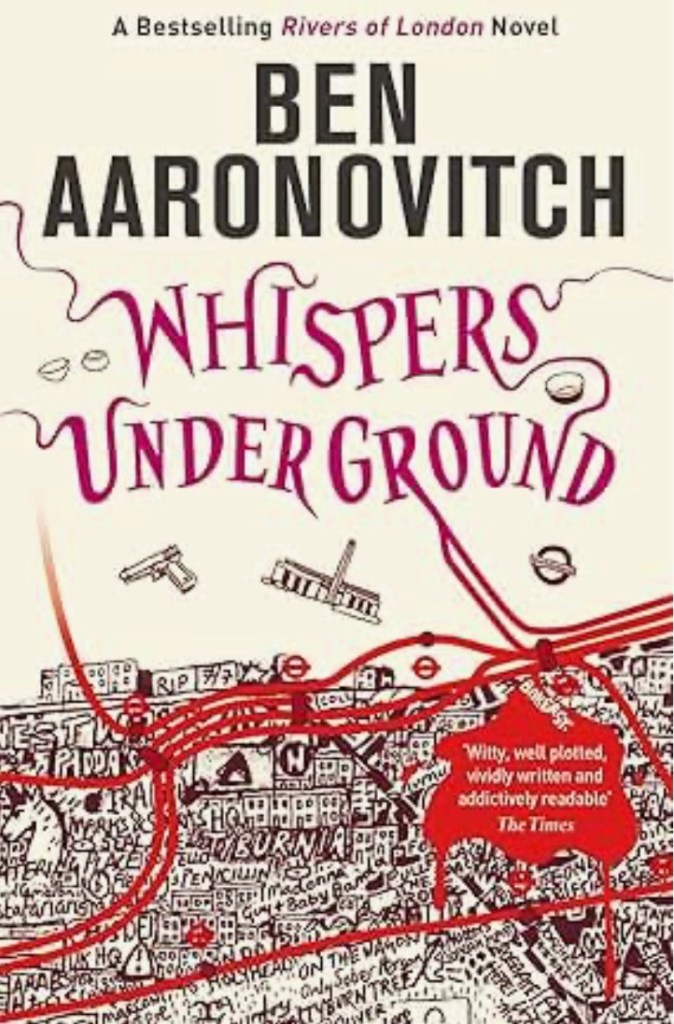
Whispers Underground, Ben Aaronovitch
I really enjoyed this one. The third book in the Rivers of London series sees Peter Grant travelling underground, uncovering details of a crime that’s segmented into a day-by-day recount. While I don’t think I enjoyed this one quite as much as the first two in the series, I did find it hard to put down once I’d set aside enough time to properly sink my teeth in.
Aaronovitch consistently delivers through his writing style that effectively captures the sarcastic voice of its protagonist in a way that makes me feel like I know the ins and outs of the Metropolitan police force. His description of the city of London, its underground tube and sewer system, and Grant’s headquarters, really make me feel as if I’m there. It helps that I’ve taught about how the sewers were made, which elevates their description in my head.
I love as well how Aaronovitch ties up enough loose ends so that we’re satisfied, and yet still yearning for more based on the strands left dangling.
Highly recommended (but start with the first in the series). Read in paperback. Get yours here.
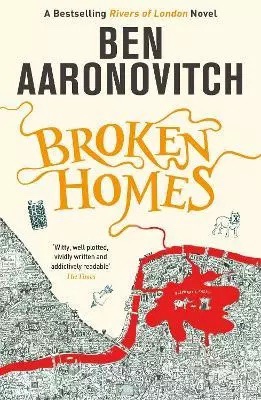
Broken Homes, Ben Aaronovitch
I’ve been steadily making my way through the Rivers of London series, and Broken Homes just hit differently. The usual blend of magic-meets-policing is here, but this one felt darker, more layered – and the twists and turns along the way? Did not see them coming.
I love how Aaronovitch captures the strange beauty of London while weaving in magical realism and sharp, witty dialogue. Peter Grant continues to be an endearingly sarcastic narrator, and the architectural weirdness in this instalment gave it an extra eerie vibe I really enjoyed. Some pacing issues in the middle, but the payoff was strong. If you’re already in the series, don’t stop here – it’s a solid continuation and sets up bigger things to come. Easily my best out of the four that I’ve read so far.
Read in paperback. Click here for yours.
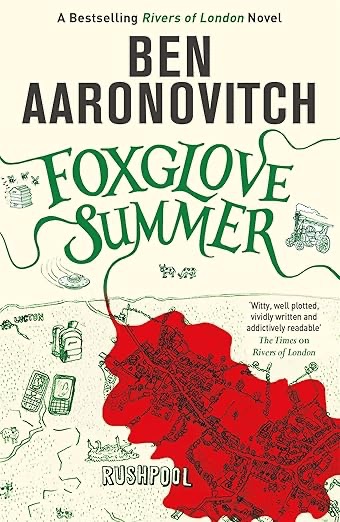
Foxglove Summer, Ben Aaronvitch
This time, Peter Grant has been sent out of London to rural Herefordshire – to investigate the disappearance of two young girls. If you like mystery novels set in an urban fantasy realm, then you’ll like this book. If you’ve read the other novels in the series, then you’ll like this book. If you like witty, fast-talking narrators in a novel that’s incredibly readable, then you’ll like this book.
Aaronovitch also deftly pulls together a narrative that delves deeper and deeper into the growing abundance of lore that is magic in his intriguing world, propelling readers at a rate that’s clearly five books in. Highly recommended.
Read in paperback. Find your copy here.
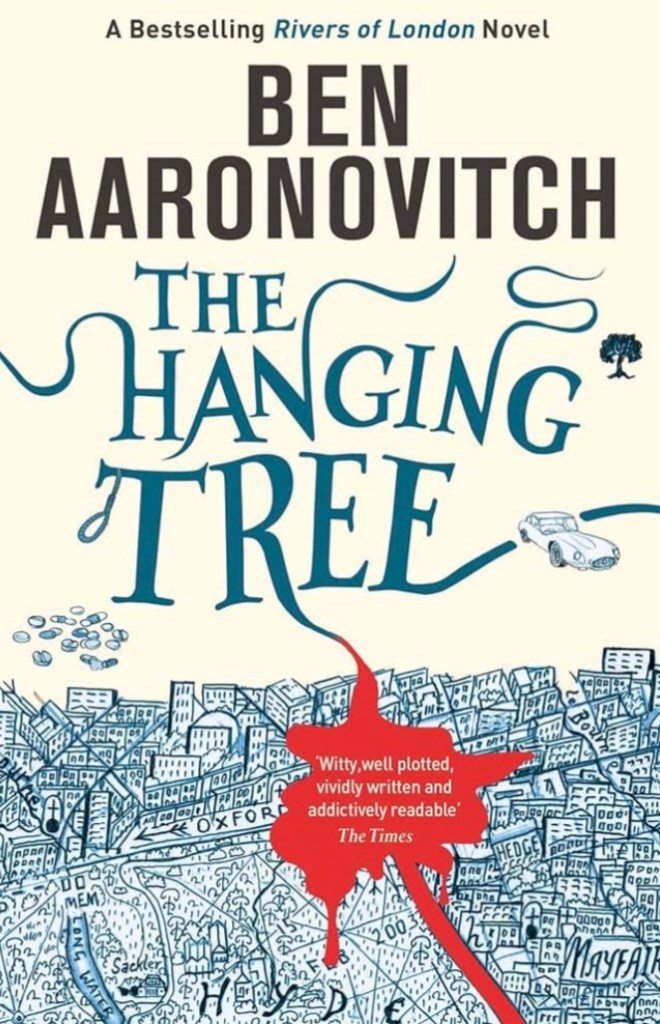
The Hanging Tree, Ben Aaronovitch
Another Peter Grant escapade; another great entry from Aaronovitch.
This novel takes Peter deep into the exclusive world of London’s elite, where secrets, money and magic intersect. Peter and Nightingale have to intervene yet again, as we finally begin to connect the dots about the Faceless Man. As ever, this urban fantasy just does it for me. The themes of class, privilege, tradition and the magical world, where Peter has to balance his commitment to the law, alongside the laws of magic and nature, are so readable.
Start with book 1 and just work your way to here from there.
Read in paperback. You can grab yours from my link now.
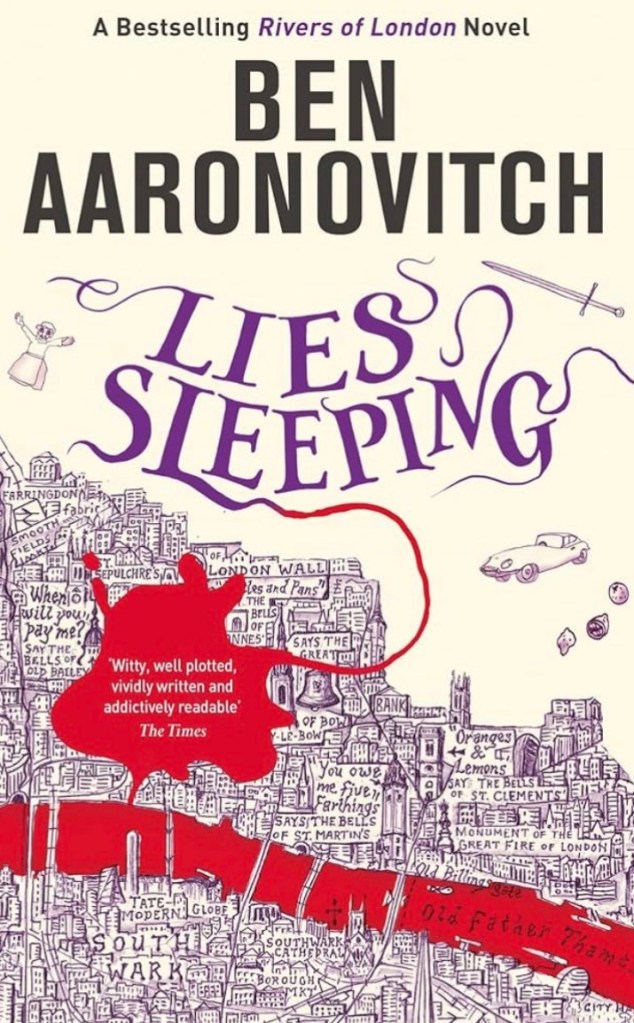
Lies Sleeping, Ben Aaronovitch
This was the perfect read for the final bit of summer: sat by the pool or on the balcony all day, enjoying the quips of Peter Grant as he continues to explore yet another magical mystery. This time, though, the stakes were even higher than before, with some final twists and turns that I could never have predicted.
The only thing that let it down? This particular adventure could have done with a good proof read. I’ve noticed some SPaG issues in Aaronovitch’s other novels, but this time it was actually quite distracting from the story. Other than that, I had a great time, and as always would highly recommend any novel in this seminal series. The books continue to be highly readable page-turners, laced with wit and wry humour.
Read in paperback. Check out my link to get your own copy.
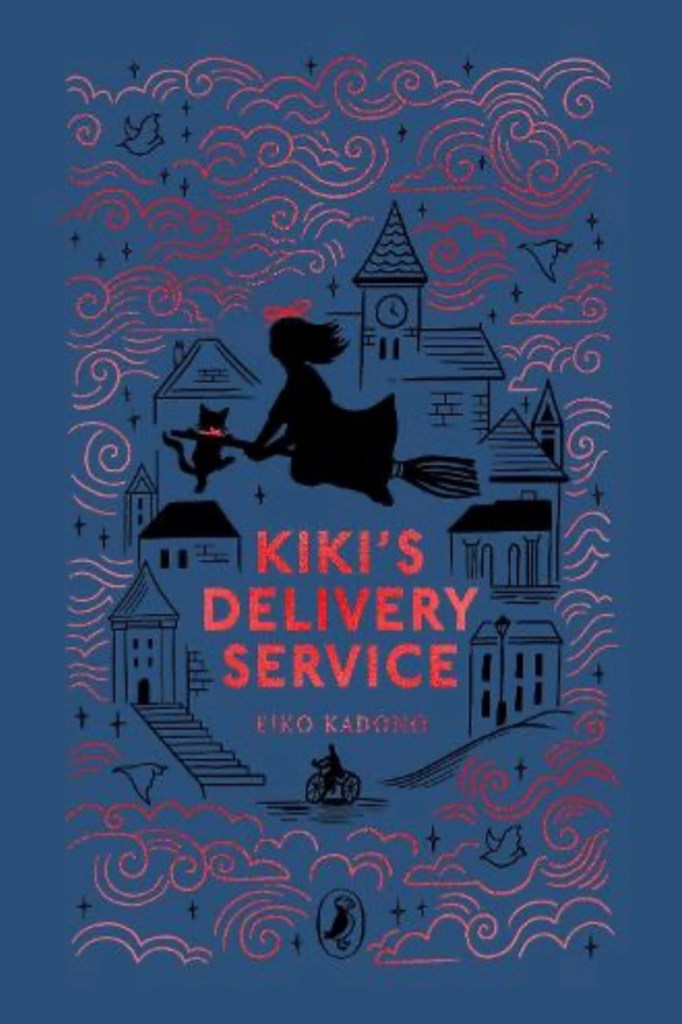
Kiki’s Delivery Service, Eiko Kadono
‘I’m going to be whatever I want.’
I’ve loved Kiki’s Delivery Service – the Ghibli film – for years. I found this short book while in a book shop in Aachen, Germany, in the English section and, when I saw the gorgeously illustrated hardback design, I knew I had to have it in my collection.
The book is actually very different from the film. While the core beats remain, and it is a quintessential journey about a young girl coming of age and discovering who she is as a witch, the film plays up other elements far more than you’d expect to see them in the book.
But, I suppose, that adds up. This is, at its core, a fun children’s book – based on a drawing by the author’s child. I’d be so interested to see whether the other elements in the film that aren’t seen in the book are explored in Kiki’s sequels, which sadly haven’t seen any English translations yet.
If you’re a fan of the Ghibli film, this is an essential addition to your reading list. If you’ve never seen the film, what are you waiting for? Add both to your lists pronto!
Read in hardback. Check this link for yours.
The Non-Fiction
Turns out, all of the below were read on 2x speed on Spotify. I find audiobooks to be a much better format for diving into non-fiction, since you can passively listen and really tune in when something sounds relevant. The downside to this format? In a physical non-fiction book, it’s a lot easier to come back to the text for guidance, which is particularly pertinent in self-help and self-improvement books.
Still, I read 10 books in this way this year. You get 15 hours of free listening on Spotify every month, which I chalk up to about 1 book a month, depending on length and what I feel like reading alongside the many podcasts that I have on the go.
Next year, I’m aiming for one non-fic text on 2x audio per month. Best off, you don’t even need a subscription for this: if you’re based in the UK, your local library will offer audiobooks totally and completely for free. Considering how much audiobooks usually cost, and the fact that using them supports our libraries, why wouldn’t you take them up on this fantastic offer?
In the meantime, why not learn about the benefits of speed listening?
You are a Badass: How to Stop Doubting Your Greatness and Start Living an Awesome Life, Jen Sincero
I’m not entirely sure that this book was for me. It’s a very different type of self-help non fiction read, more focusing on a ‘Woo! Go get ‘em!’ Attitude that doesn’t gel with the kind of genre that I’m used to. What I prefer is a tangible action plan, based on evidence, to effect change or self-improvement.
What I felt that this boiled down to was a kind of motivational idea that if you ‘manifest’ (horrific phrase) something hard enough, it can happen.
That doesn’t really sit well with me, in a world where hard work and chasing your dreams with concrete plans is what will lead to meaningful change in your life.
However, I haven’t rated this any lower for the simple fact that this kind of message is really useful to hear in times where all you’re in need of is a simple pick-me-up. I love that so many of the chapters end with an affirmative message that you are great and that you should love yourself; we need more of those positivities in the world.
Equally, the book was very readable, with a decent and engaging writing style.
Find the paperback version here.
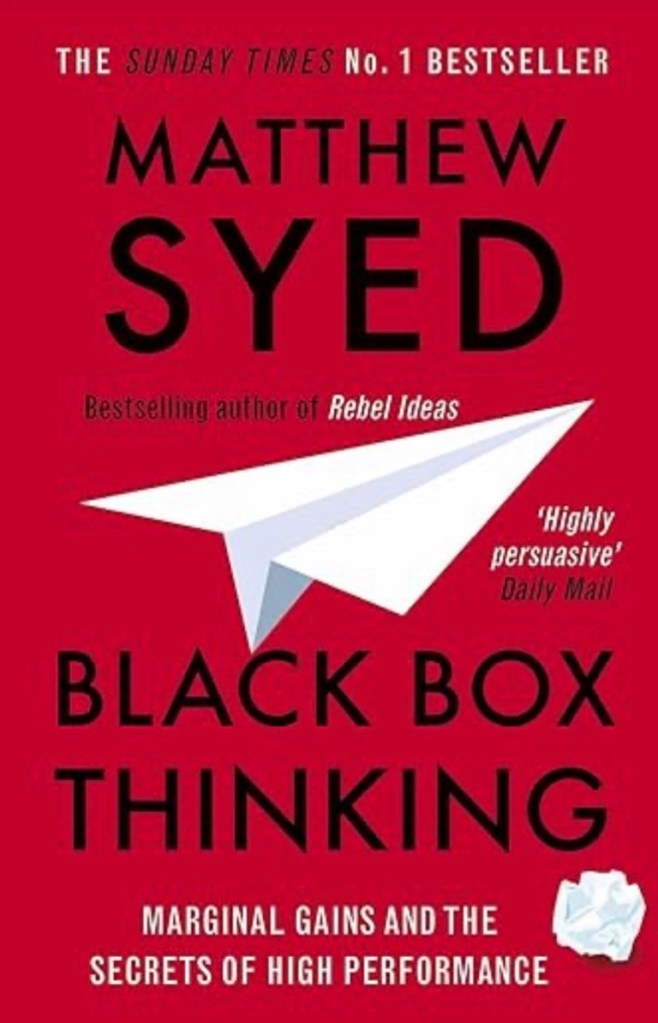
Black Box Thinking: Growth Mindset and the Secrets of High Performance, Matthew Syed
This book was dead interesting. It repeats the same central thesis again and again, which has been noted in other reviews but, from a teaching perspective, this is actually really beneficial for getting your message across, embedding it, and ensuring that you continue to act on the same thoughts again and again.
Syed’s writing flows well and his focus on how people in certain professions, like the aviation industry, are contractually obliged to report their mistakes so that we can all learn from them and improve upon them felt really meaningful to me. Why shouldn’t professionals in other industries learn from the mistakes of others so that we can all do better next time?
That being said, it certainly wasn’t my favourite in the self-help genre. While Syed does build upon the psychology of mistake-making again and again, if you feel like you’ve understood the point that he’s trying to make, then do yourself a favour and move onto a different text to read.
Digital Minimalism: Choosing a Focused Life in a Noisy World, Cal Newport
I’m constantly trialling new productivity systems, and my previous obsession was the Eisenhower Matrix. However, Newport’s text felt like the missing piece of the puzzle.
Newport moves beyond the standard ‘delete your apps’ advice and introduces this great philosophy of intentionality. The core idea is that our tools should serve our values, not the other way around. The idea of digital decluttering is a really aggressive 30-day reset, forcing you to identify which digital habits rot your Home Screen, and which provide genuine value.
My favourite part was the focus on high-quality leisure. As a teacher and writer, it’s easy to mistake passive scrolling for switching off, but Newport argues that real rest comes from demanding physical or social activities. It empowers us to reclaim those dead time gaps in our day with something more meaningful than a notification loop.
If you’ve read Atomic Habits or Deep Work, this is a great follow-up.
Choose this affiliate link in a Noisy World to grab yours.

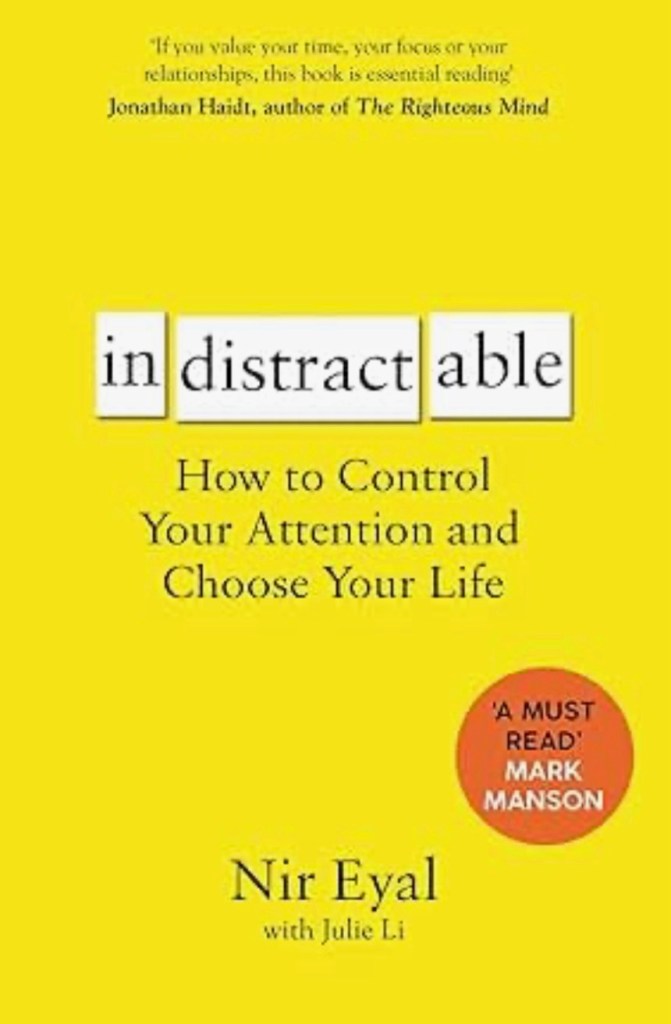
Indistractible: How to Control Your Attention and Choose Your Life, Nir Eyal, Julie Li
I love this book. Eyal and Li present a really convincing argument on how to become indistractible, by acknowledging any potential distractions and putting them to one side – ‘for now…for just ten minutes’. In ten minutes, if you still want to do the thing, you go for it.
Chances are that, after ten minutes, the feeling will have passed – leaving you free to crack on with whatever it is you were doing. Or, if you still want to do the thing in ten minutes, you go for it. They present their argument with lots of different examples, from deep work to smoking, leaving it really applicable to most people’s lives.
The part that really stood out to me was pretty unexpected. There’s a whole section on how we help kids to become indistractible. From a teaching perspective, this is essential. How can we expect children to understand the benefits of ignoring their phone while they work, for instance, if they don’t understand why that’s important? It’s all about getting them on-side with these techniques, and how you go about doing that, without just blindly hoping that they listen to you and follow instructions on limiting screen time, or anything else that might distract.
Become Indistractible and buy yours from my link.
The Subtle Art of Not Giving a F*ck: A Counterintuitive Approach to Living a Good Life, Mark Manson
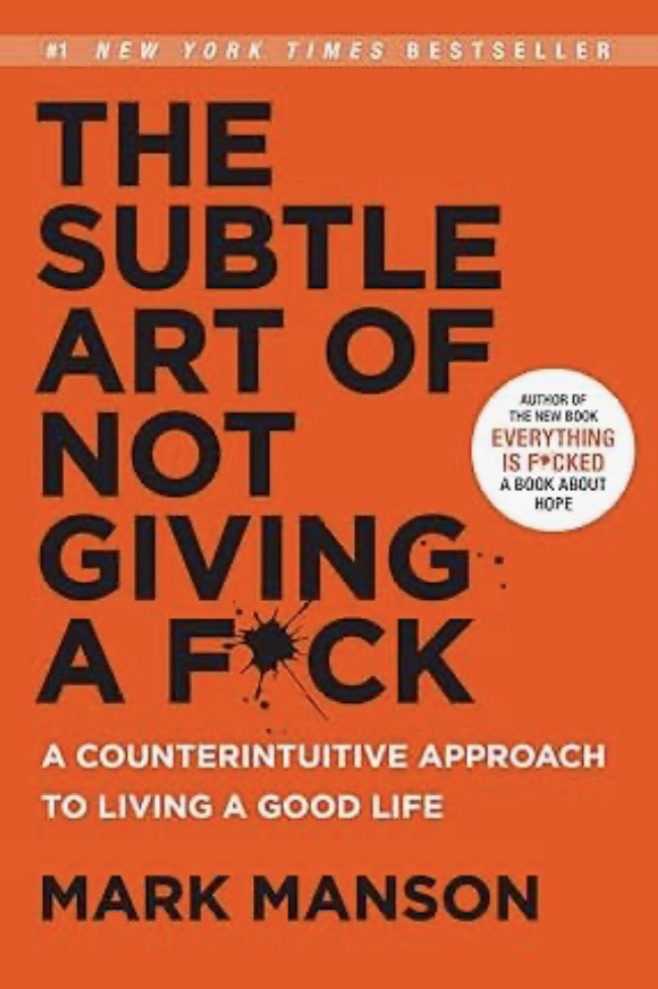
This book is like a refreshing slap in the face – in the best way possible. Mark Manson cuts through the toxic positivity that’s everywhere and gives it to you straight: life is hard, you’re not special, and trying to be happy all the time is making you miserable. And yet… it’s weirdly comforting.
I didn’t agree with everything he said, but I found myself nodding along in time with the audiobook and rethinking what I actually give my time and energy to in my everyday life. It’s not a self-help book in the traditional sense. It’s more like a tough-love pep talk from a friend who’s had enough of your whining. If you want mindset-shifting advice without the fluff, this is worth a read. Just don’t expect warm hugs and affirmations.
Rest: Why You Get More Done When You Work Less, Alex Soojung-Kim Pang
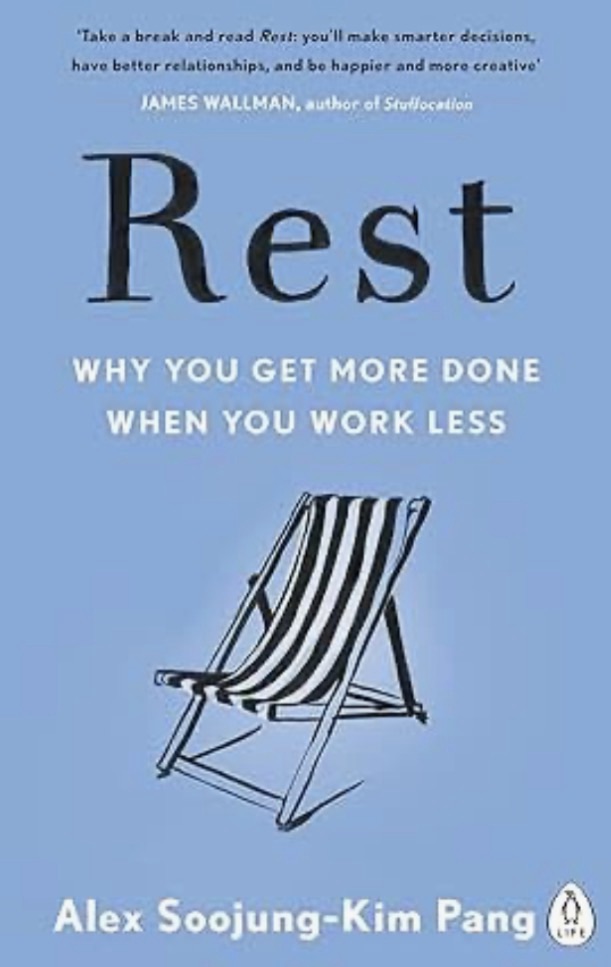
I really like the premise of this book.
We’re told so often – in work, in the media, by friends and family – that more work (or working harder) will lead to greater productivity.
This is a myth.
Pang argues that rest is equally, if not more, important, and will lead to deeper work. He discuss the four types of rest – sleep, naps, deep play (so, like, hobbies) and deliberate practice (working on the development of your skills). By more intentionally incorporating these into your life, you can then improve your focus, creativity and overall productivity.
That’s the premise, anyway. He includes lots of real examples of individuals who have in fact played just as hard as they’ve worked – to great success. If anything, it’s quite an invigorating, inspiring, read, but with a simple message that’s been reiterated many times in many ways.
But maybe there’s a time and a place for a book like this, since so many of us persistently fail to heed its message.
Recommended nonetheless.
Read in 2x speed on Spotify, on a flight from the UK to Canada and back. The perfect long-distance travel companion, which you can grab here.
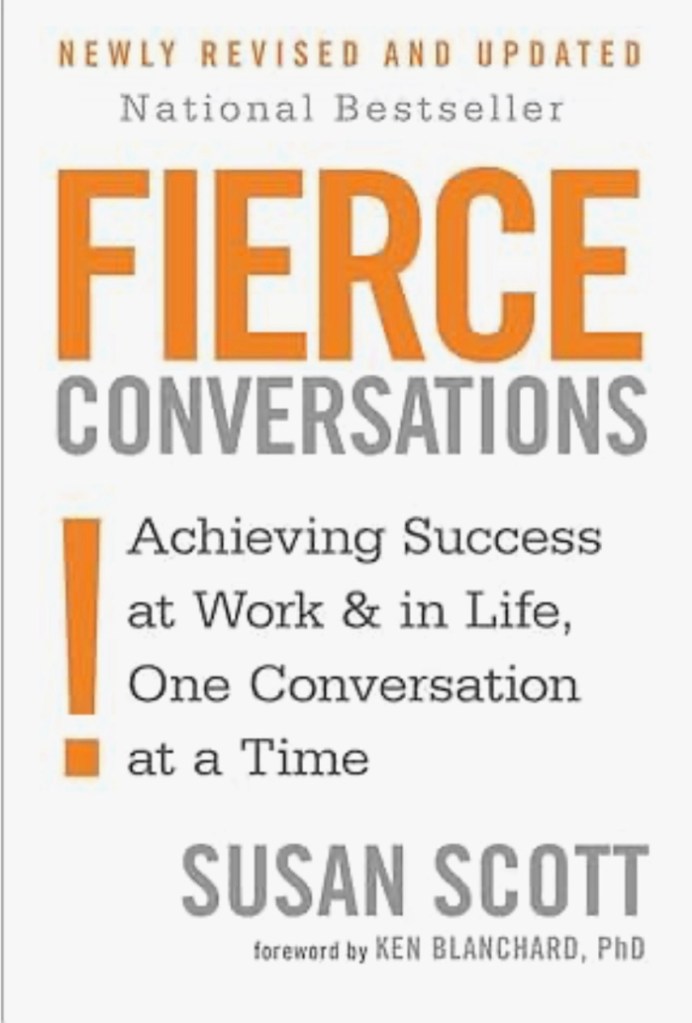
Fierce Conversations: Achieving Success at Work and in Life One Conversation at a Time, Susan Scott
Countless people recommended this book at work, and I’d absorbed the key messages before, but there’s so much more that you pick up about managing professional – and personal – relationships from actually sitting down and reading about it.
The whole idea behind the text is that the quality of a conversation that you have with someone, whether that is at work or in your personal life, can determine the quality of your relationship with them. If we’re talking professionally, then that relationship quality can have a knock-on effect and determine the success of an organisation.
I’ve recently taken on a higher role in my workplace as the Head of History, where I’ll be managing people, so this was the perfect summer read in between school years!
The long and short of Scott’s book is that, by having ‘fierce’ conversations with people, you’re actually putting more work into your relationship with them. It’s not about being aggressive, but about being real and authentic.
The book introduces this great framework of seven principles for how to have these fierce conversations, including one of my favourites – that silence should do the heavy lifting. As a result, you’ll be able to confront reality, clarify expectations and tackle tough issues head-on to build stronger, more effective relationships.
Well worth the read, even if you’re at the start of your career and not yet in a place where you’ll be managing people. To learn more, check out my affiliate link.
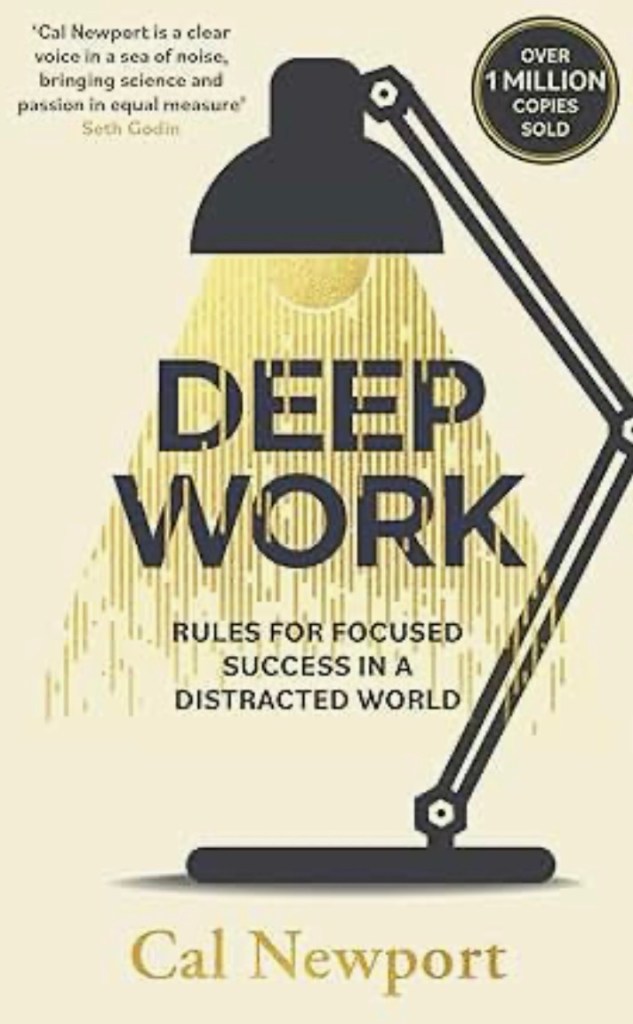
Deep Work: Rules for Focused Success in a Distracted World, Cal Newport
Deep Work is great.
Its core argument divides work into two different types:
– Deep Work, which is focused, high-value and high-skill
– Shallow Work, which isn’t cognitively demanding and is a type of task that you can do while distracted, like checking your emails or social media. It won’t push your skills forward
In the world in which we live, which is oversaturated in technology, it’s really, really hard to quickly master hard things and produce elite-level results. Newport argues that you need this to have a successful career.
So, he provided us with four rules for cultivating deep work habits
1. Work Deeply (do what you need to foster deep focus)
2. Embrace Boredom (don’t check your phone every five seconds)
3. Quit Social Media (cut out any tools that don’t offer you a significant positive impact)
4. Drain the Shallows (schedule every minute of your workday to avoid distraction – even checking your emails should be accounted for in your schedule)
I really liked Newport’s approach. Alongside Clear’s Atomic Habits and the 4-Hour Work Week, it’s a quintessential read for optimising your day.
Speaking of, you can optimise your day by grabbing your own copy too!
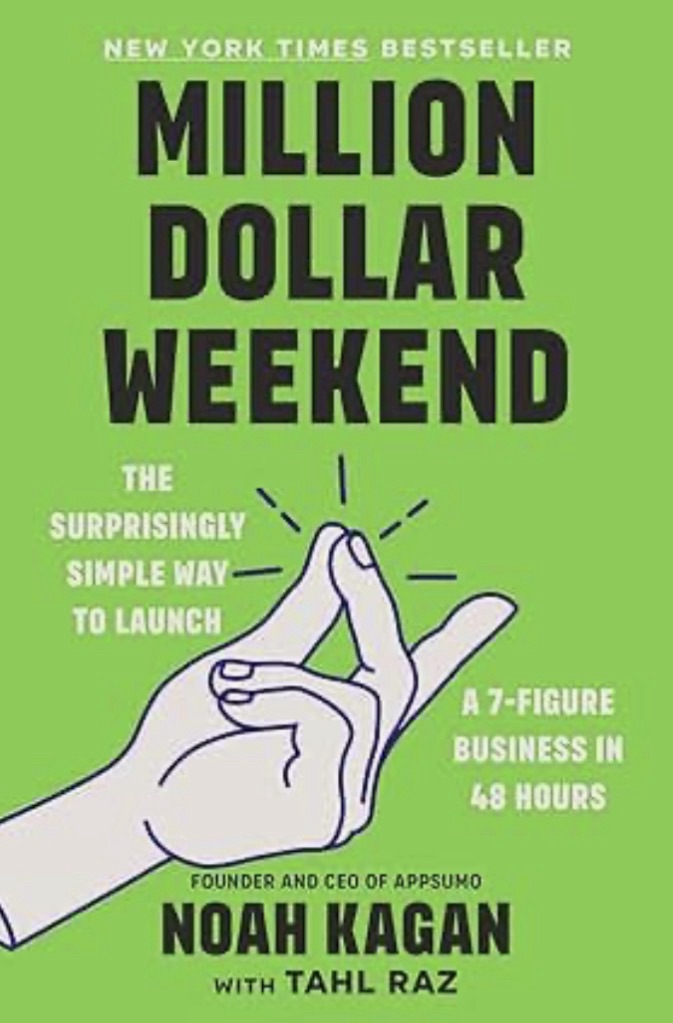
Million Dollar Weekend: The Surprisingly Simple Way to Launch a 7-Figure Business in 48 Hours, Noah Kagan
Get ready to challenge your traditional approach to entrepreneurship.
The closest thing to a business that I own is my personal blog, so I can’t count myself as a business-owner, but I’ve always been interested in the idea of totally managing my own time and working for myself. Kagan argues that people waste months planning, building and perfecting an idea that nobody actually wants. His book offers a practical, 48-hour guide to testing a business idea and securing your first paying customer.
So, if you’re like me and fancy owning your own business one day, it’s not a bad place to start. Follow Kagan’s advice and he thinks that you can make $1,000 in revenue in a single weekend, with those sales validating your pie-in-the-sky ideas. A great idea is, after all, only worth what somebody is willing to pay for it.
So, like all great productivity gurus and business book writers, Kagan offers a number of core principles to live by:
1. Stop Planning, Start Doing: take immediate action on your business by talking to potential customers.
2. The $1,000 Validation: Focus all of your efforts on that first thousand bucks, proving that the idea can be scaled successfully.
3. The Ask: The most crucial step is asking for the sale. Practice by asking a barista for a discount. If you’re not prepared to do that, Kagan posits that you’re not prepared to ask people to pay you thousands of dollars for your million dollar idea. Not quite sure I agree on this one but I get the principle.
4. Embrace the Flop: If your idea doesn’t generate sales quickly, move on.
5. Use Minimum Viable Offers: Do this instead of starting with a product. Offer a future product, a consultation, or anything that allows you to collect cash and feedback before committing to anything concrete.
While I don’t agree with all of Kagan’s ideas, I liked his general philosophy: stop planning and start doing.
Here’s your link to Kagan’s work.
The Book Your Cat Wishes You Would Read: The must-have guide for cat-lovers, Lucy Hoile
As someone who’s never owned a cat before, this book felt like essential reading. I feel like I have a much better understanding of how to care for them more effectively, and my understanding of their needs is far, far better.
Now, do I think that what’s been written is revolutionary? Probably not; you could probably find other texts that do a very similar job. But this is a fantastic starting point for a first time cat owner, who no longer feels out of his depth or the need to read another book on the topic.

Your 2026 Reading Challenge
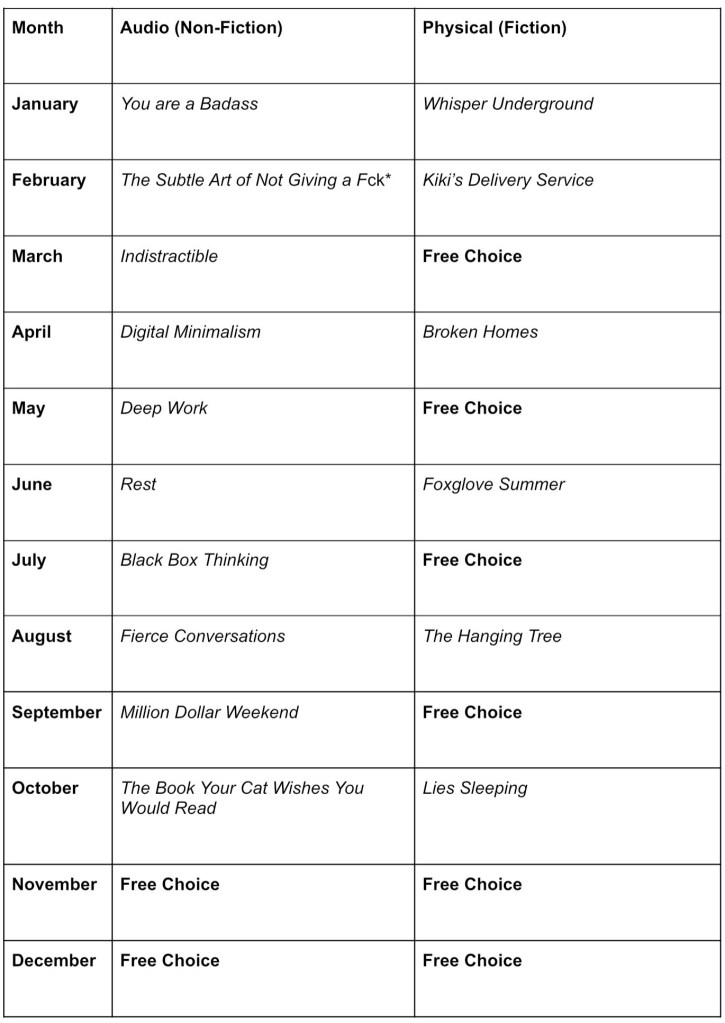
To stay on track with your reading, set yourself a goal (this could be on an app like Goodreads, but it doesn’t have to be), and then consume the non-fiction as audiobooks, and the fiction as physical books.
The non-fic will be perfect for your commute or while doing chores, while the physical books should stop you from getting sucked into your phone screen before bed. Here’s your checklist to get them all read each month:
Pro-tips
- The 2x speed trick: non-fiction audiobooks are great at a faster pace to keep the teaching momentum going. You can do this for fiction, too, and then slow it right up if you find that you’re losing your place
- Support your local library: Don’t forget that most of these audiobooks can be borrowed for free via the likes of Libby or BorrowBox using your library card.
- The Ten-Minute Rule: If you feel the urge to doom-scroll instead of reading your physical book, use the Indistractible method: wait ten minutes. If you still want to scroll, go ahead – but usually, the urge will pass.
My 2026 challenge in books
What good would setting lofty goals about reading be without setting out the texts that I’ve got my eyes on? Here are the 22 books that I’m aiming to read next year – you’ll be able to see whether they were worth the read, and whether I was able to keep up with my goals, this time next year.
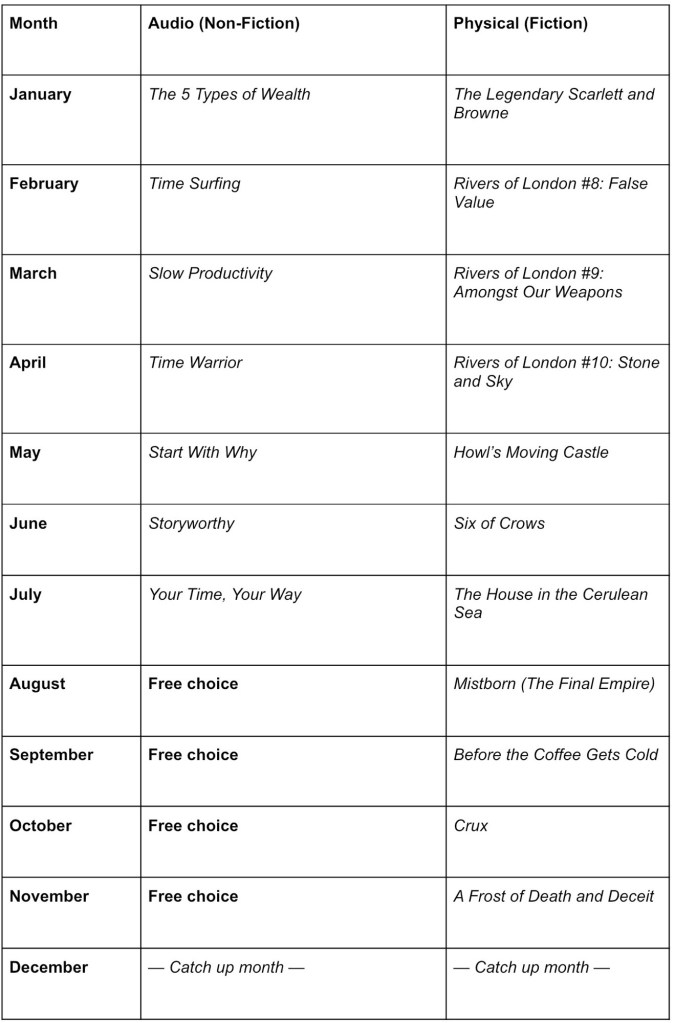
Are you going to stick to my recommendations in 2026, or read your own books? You can see that there are a few gaps in my own to-be-read list, so I’d love to hear any of your reading recommendations in the comments below.
If you liked that, you’ll love…
- Reclaim your evenings: A Busy Teacher’s Guide to Healthy Meal prep
- 16 incredible books to read in 2026
- How to actually achieve your goals in 2026: The Anti-Resolution toolkit
- The First 90 Days: How to survive (and thrive) as a new Head of History
- 7 Brutal Questions to Course-Correct your Life before 2026
While you’re here, stay subscribed!
 Hardly Hamilton